

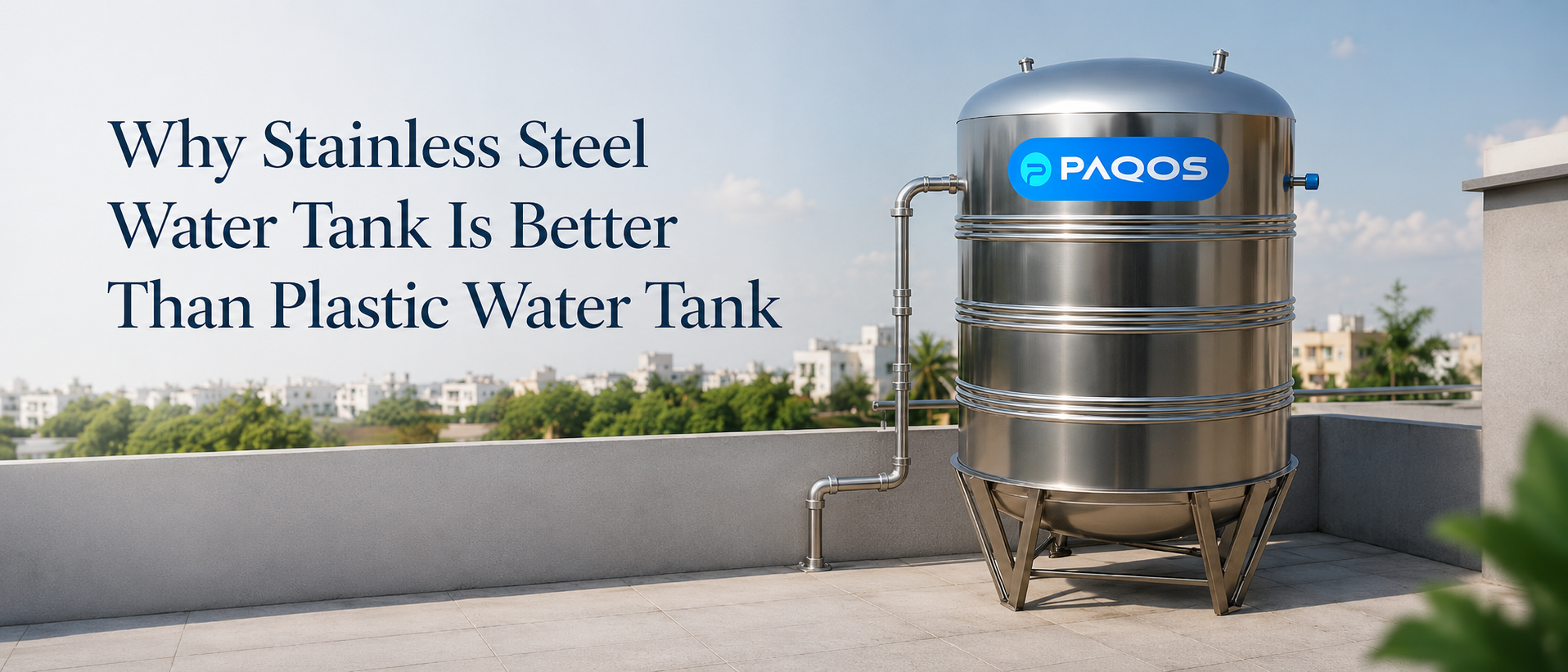
Quick answer: A stainless steel water tank is better than a plastic water tank because it offers cleaner storage, stronger durability, better heat resistance, and longer life. Stainless steel resists smell, algae, and cracks, making it a safer, more hygienic choice for storing water at home over many years.
The tank you use to store water affects more than you might think. It shapes the taste, the smell, the hygiene, and the safety of every drop you drink, cook with, or bathe in. Yet many people pick a water tank without giving the material a second thought.
Plastic water tanks are everywhere. They’re cheap, light, and easy to find. But they come with real trade-offs—especially in hot Indian weather, where rooftop tanks face the sun all day long. That’s why a growing number of homeowners, apartment owners, and families are switching to a stainless steel water tank for safer and cleaner water storage.
This guide breaks down the real differences between a plastic tank and a stainless steel tank. By the end, you’ll know which option protects your water best and gives you better value for years to come.
What Is a Stainless Steel Water Tank?
A stainless steel water tank is a storage tank made from high-quality stainless steel, designed to hold water safely and hygienically. Stainless steel is a strong, rust-resistant metal that doesn’t break down easily, even after years of use.
These tanks are used across many settings—homes, apartments, villas, terraces, rooftops, and commercial spaces. Because stainless steel is tough and food-safe, an SS water tank is widely seen as one of the best choices for clean, long-term water storage.
What Is a Plastic Water Tank?
A plastic water tank is made from molded plastic, usually a material like polyethylene. These tanks are popular because they are lightweight, affordable, and easy to install almost anywhere.
For many years, the plastic water tank has been the default choice for Indian homes. But plastic has its limits. Over time, plastic tanks can develop a smell, grow algae, fade in color, or even crack when exposed to constant heat and sunlight. These issues can affect both the tank’s lifespan and the quality of the water inside it.
Stainless Steel Water Tank vs Plastic Water Tank: Key Differences
Here’s a side-by-side look at how the two compare on the factors that matter most.
| Factor | Stainless Steel Water Tank | Plastic Water Tank |
|---|---|---|
| Hygiene | Better hygiene and cleaner storage | May develop smell or algae over time |
| Durability | Strong and long-lasting | Can crack, fade, or weaken |
| Water Quality | Helps maintain freshness | May affect taste or smell |
| Heat Resistance | Handles sunlight better | Can become weak in heat |
| Maintenance | Easier to clean | Needs frequent cleaning |
| Long-Term Value | Better investment | May need replacement sooner |
The pattern is clear. While both tanks store water, stainless steel holds up better on nearly every measure that affects your family’s daily life.
Better Water Hygiene
Hygiene is where stainless steel really stands out. Its smooth, non-porous surface gives dirt, bacteria, and algae very little to cling to. That means less buildup inside the tank and a lower risk of contamination.
Plastic tanks, on the other hand, can develop tiny scratches and rough spots over time. These small gaps become hiding places for grime and algae, which can lead to a bad smell or cloudy water. A hygienic water tank made of stainless steel keeps your stored water fresher for longer with far less effort.
Safer for Drinking Water Storage
The water in your tank doesn’t just sit there—you drink it, cook with it, bathe in it, and wash with it every single day. So the material holding that water matters a great deal.
According to the World Health Organization, safe water storage is a key part of keeping drinking water free from contamination. A stainless steel water tank supports this goal because it doesn’t react with water or release particles into it. For families who care about clean, safe water storage, stainless steel is a dependable choice.
More Durable and Long-Lasting
Stainless steel is simply built to last. It resists rust, handles pressure well, and stays strong through changing seasons. A good stainless steel water storage tank can serve a household for decades without losing its strength.
Plastic tanks have a shorter road. Constant exposure to sunlight and heat can make the plastic brittle. Over time, this leads to fading, cracks, and leaks. When you weigh plastic tank vs stainless steel tank on durability alone, stainless steel wins comfortably.
Better Protection from Heat and Sunlight
Indian rooftops can get extremely hot, with tanks sitting under direct sun for hours each day. Plastic doesn’t cope well with this kind of heat. It can warp, weaken, and break down faster, and the water inside can heat up quickly too.
Stainless steel handles these conditions much better. It stays structurally sound even after years of sun exposure, which makes it a smarter pick for long-term rooftop and terrace installation. If your tank lives on the roof, this difference is hard to ignore.
Easy to Clean and Maintain
Nobody enjoys cleaning a water tank. The good news is that stainless steel makes the job easier. Its smooth inner surface means dirt and slime don’t stick the way they do in plastic tanks. A quick rinse and wipe usually does the trick.
Plastic tanks need more frequent cleaning because their surface traps grime more easily. Choosing stainless steel means you spend less time on maintenance while still keeping your water clean and your tank in good shape.
Better Long-Term Value for Homeowners
It’s true that a stainless steel water tank costs more upfront than a plastic one. But the price tag tells only part of the story.
A plastic tank may need replacing within a few years, especially in harsh weather. A stainless steel tank, by contrast, keeps performing for a much longer time with minimal upkeep. Fewer replacements, lower cleaning effort, and better water quality all add up. Over the long run, stainless steel often turns out to be the more affordable option.
When Should You Choose a Stainless Steel Water Tank?
A stainless steel water tank suits a wide range of needs. It’s an excellent choice for:
- Homes
- Apartments
- Villas
- Farmhouses
- Terraces
- Rooftops
- Commercial spaces
- Families who want clean and safe water storage
If durability, hygiene, and long-term value matter to you, stainless steel is worth serious consideration. You can explore options like a stainless steel water tank for home to find the right fit for your space.
Why Choose Paqos Stainless Steel Water Tank?
When you’re investing in something as important as water storage, the brand behind the tank matters. Paqos designs stainless steel water tanks with everyday Indian homes in mind.
Here’s what sets Paqos apart:
- Premium stainless steel body built for strength and safety
- Hygienic design that supports clean, fresh water storage
- Durable construction made to last through tough weather
- Modern rooftop installation suited for terraces and rooftops
- Reliable water solutions backed by dependable support
Paqos focuses on giving families a safe water storage tank they can trust day after day. Whether you’re setting up a new home or upgrading an old plastic tank, Paqos offers a practical, long-lasting solution. You can also look into a complete water solution for home to cover all your water needs in one place.
Final Thoughts: Make the Smarter Water Storage Choice
When you compare a stainless steel water tank with a plastic water tank, the advantages line up clearly. Stainless steel offers better hygiene, stronger durability, safer drinking water, easier maintenance, and better long-term value. Plastic may cost less at first, but it often falls short where it counts.
For homeowners who want clean, safe, and reliable water storage for years to come, stainless steel is the wiser investment. Pairing it with the right setup—like a water pressure booster system or a water softener for home—can make your home’s water experience even better.
Looking for a safe, hygienic, and long-lasting stainless steel water tank for your home? Explore Paqos Stainless Steel Water Tank solutions and upgrade your water storage today.
Frequently Asked Questions
Is a stainless steel water tank better than a plastic water tank?
Yes. A stainless steel water tank is generally better because it is more durable, more hygienic, and longer-lasting than a plastic water tank. It also resists heat, smell, and cracks far better over time.
Is a stainless steel water tank safe for drinking water?
Yes. Stainless steel water tanks are well suited for storing water used for drinking, cooking, bathing, and daily household needs. The material doesn’t react with water, which helps keep it clean and fresh.
Does a plastic water tank affect water quality?
It can. Over time, some plastic tanks may develop a smell, grow algae, crack, or collect dirt—especially when exposed to constant heat and sunlight. This can affect the taste and quality of stored water.
Which water tank is best for home?
A stainless steel water tank is a strong choice for homes that want safe, clean, hygienic, and long-lasting water storage. It performs well in Indian weather and needs less frequent cleaning.
Is a stainless steel water tank costly?
It usually costs more than a plastic tank upfront. However, it offers better long-term value thanks to its durability and low maintenance, which can save money over the years.
Can a stainless steel water tank be installed on a terrace?
Yes. Stainless steel water tanks are well suited for terrace and rooftop installation. They handle direct sunlight and heat better than plastic tanks, making them ideal for outdoor placement.
Is a stainless steel water tank worth buying?
For most homeowners, yes. The combination of hygiene, durability, and long-term savings makes a stainless steel water tank a worthwhile investment, especially for families who prioritize clean and safe water.