

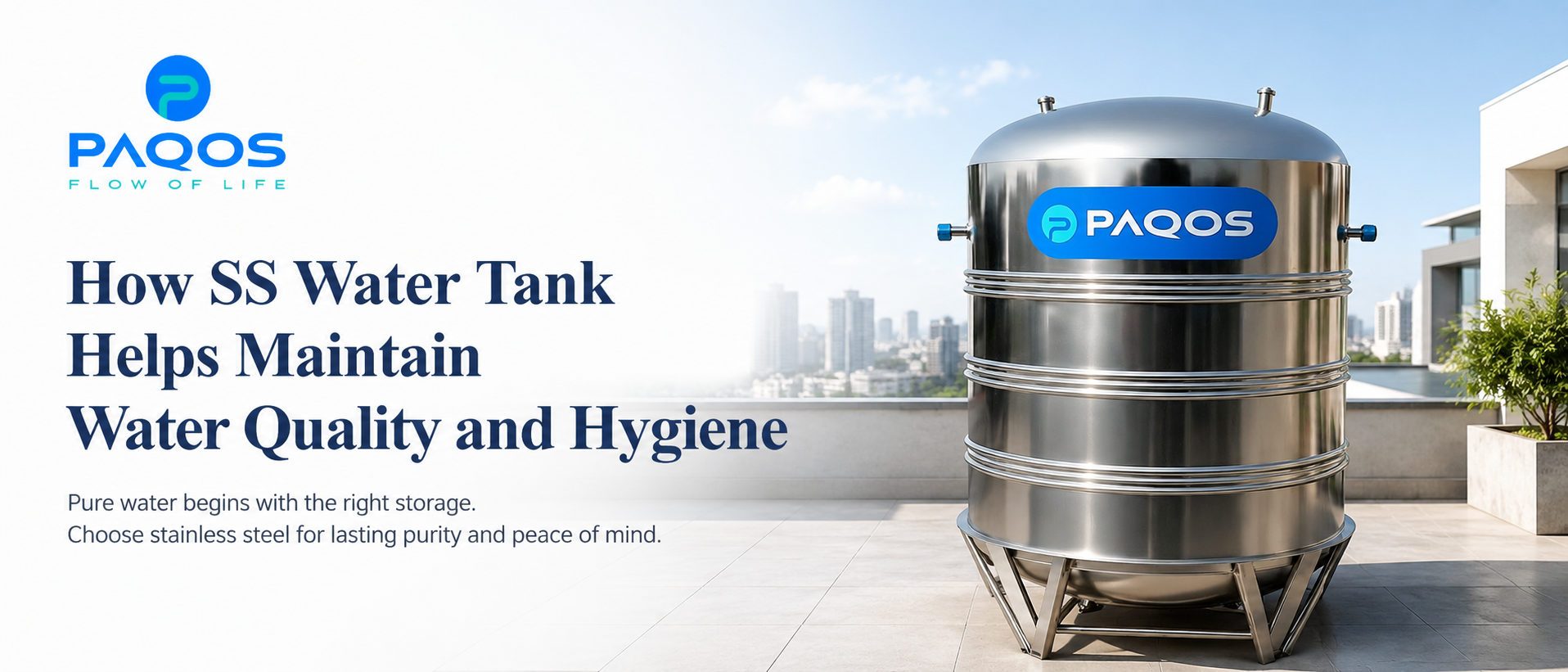
Quick answer: An SS (stainless steel) water tank helps maintain water quality by resisting rust, preventing algae growth, eliminating odors, and offering a smooth inner surface that reduces bacterial buildup. Stainless steel water tanks are widely considered a safer, more durable option for hygienic water storage at home compared to conventional plastic tanks.
Most households spend thousands on water purifiers—but here’s something many overlook: the tank storing that purified water. If your water storage tank is made of poor-quality material, it can undo much of the work your purifier does. Contaminants, bad odors, algae, and bacterial growth can all start right there in the tank.
Choosing the right water storage tank is just as important as choosing the right purifier. That’s where an SS water tank for home makes all the difference. Stainless steel offers a cleaner, safer, and more durable way to store water—whether you live in an apartment, a villa, or an independent house.
This guide breaks down exactly how an SS water tank protects water quality, why it outperforms plastic tanks, and what to look for when buying one for your home.
What Is an SS Water Tank?
SS stands for stainless steel. An SS water tank is a water storage container made from food-grade stainless steel, designed to safely store water for household and commercial use.
These tanks are commonly installed on terraces, underground pits, or utility areas in homes, apartments, villas, and commercial buildings. Unlike plastic or concrete tanks, stainless steel tanks are built to resist corrosion, maintain structural integrity, and keep stored water clean over long periods of time.
The growing popularity of stainless steel water tanks across Indian homes reflects a shift in how families think about water hygiene—not just at the purifier stage, but at the storage stage too.
Why Water Tank Material Matters for Water Quality
The material of your water storage tank has a direct impact on what ends up in your glass.
Plastic tanks, over time, can absorb heat, develop micro-cracks, and start releasing chemicals into stored water. Concrete tanks can develop moss, algae, and sediment buildup. Both can result in water that smells off, tastes strange, or carries invisible contaminants.
Stainless steel, by contrast, is non-reactive. It does not leach chemicals, does not absorb heat the way plastic does, and does not provide a hospitable surface for bacteria or algae to thrive. The material itself plays a passive but powerful role in keeping water clean from the moment it enters the tank to the moment it reaches your tap.
How SS Water Tank Helps Keep Water Clean
A clean water storage tank starts with the right surface. The inner walls of a stainless steel tank are smooth, unlike plastic tanks that can develop rough, porous surfaces over time. This smoothness means dirt and sediment have fewer places to settle and stick.
Here’s what that means in practice:
- Less dirt buildup: Sediment and debris do not cling to stainless steel surfaces the way they do to degraded plastic.
- No bad odors: Plastic tanks are known to develop a smell over time, especially in hot climates. Stainless steel does not absorb or emit odors.
- Better water freshness: Water stored in a stainless steel tank retains its natural taste and quality for longer.
- Safer for daily use: Whether it’s for drinking, cooking, or bathing, water stored in an SS tank is less likely to be compromised by the container itself.
For families using stored water across multiple daily needs, these factors add up to a meaningful difference in overall household hygiene.
Helps Reduce Algae and Bacterial Growth
Algae needs two things to grow: sunlight and nutrients. Many plastic water tanks, especially lighter-colored ones, allow sunlight to pass through the walls—creating the perfect environment for algae to develop inside the tank.
Stainless steel is opaque. Sunlight cannot penetrate the walls, which cuts off one of the primary conditions for algae growth. This is a simple but significant advantage, particularly during summer months when tanks are exposed to direct sunlight for hours each day.
Beyond algae, the non-porous surface of stainless steel also reduces the likelihood of bacterial colonies forming. According to the World Health Organization, maintaining clean water storage containers is one of the key steps in preventing waterborne diseases at the household level (WHO Household Water Treatment and Safe Storage).
Safe for Drinking and Cooking Water Storage
When water is destined for drinking or cooking, the stakes are higher. The materials it contacts—from pipes to the storage tank—should be food-safe and non-reactive.
Food-grade stainless steel (typically 304-grade) is the same material used in commercial kitchens, food processing equipment, and medical instruments. It does not rust, does not corrode when exposed to water, and does not interact with the water chemically. This makes it one of the safest choices for a safe water storage tank used in everyday household life.
For families with young children, elderly members, or anyone with a sensitive immune system, this level of safety is not a luxury—it’s a necessity.
SS Water Tank vs Plastic Water Tank
Here’s a straightforward comparison:
| Feature | SS Water Tank | Plastic Water Tank |
|---|---|---|
| Durability | High — lasts 15–20+ years | Moderate — degrades over time |
| Odor | None | Can develop odors |
| Algae resistance | High — blocks sunlight | Low — may allow light through |
| Chemical leaching | None | Possible, especially in heat |
| Cleaning ease | Easy — smooth inner surface | Harder — surface becomes rough |
| Appearance over time | Retains look | May fade, crack, or discolor |
Plastic tanks are cheaper upfront, but they tend to need replacement more frequently and can compromise water hygiene along the way. An SS water tank, while a larger initial investment, delivers better long-term value and consistently safer water storage.
Easy to Clean and Maintain
Cleaning a water tank is something most households do once or twice a year—but the ease of that process depends heavily on the tank’s material.
The smooth inner surface of a stainless steel tank makes the job straightforward. Dirt and sediment do not bond strongly to the walls, so a standard cleaning process is usually sufficient to restore the tank to a hygienic state. There is no need for harsh chemicals or heavy scrubbing.
Plastic tanks, particularly older ones with a roughened inner surface, require more effort and are more likely to harbor residual buildup even after cleaning.
Long-Term Hygiene and Durability
A stainless steel water tank for home is a long-term investment in your family’s health. These tanks are built to withstand years of use without degrading in quality. They do not rust, do not warp under heat, and maintain their structural strength even in demanding climates.
Over a 10–15 year period, the hygiene benefits compound. While a plastic tank may become increasingly problematic as it ages, an SS tank continues to provide clean, odor-free water storage with minimal maintenance.
Why Choose Paqos SS Water Tank?
Paqos is a trusted water solution brand focused on bringing reliable, hygienic storage options to modern Indian homes. The Paqos SS water tank is built from premium stainless steel, designed with a focus on safe water storage, clean interiors, and long-lasting durability.
What sets Paqos apart is its attention to both function and design. The tanks are built to fit seamlessly into modern homes—whether you need a terrace installation, an underground unit, or a compact solution for an apartment. With a durable body, food-safe material, and dependable product support, Paqos offers a complete water solution for home that families can rely on for years.
For those also managing water pressure across multiple floors, Paqos also offers a water pressure booster system
to complement your storage setup.
The Smart Choice for Every Home
Clean water does not end at the purifier. It continues through your pipes, into your tank, and eventually into everything your family drinks, cooks, and bathes with. Choosing the right storage tank is the last—and often the most overlooked—step in that chain.
An SS water tank gives you a storage solution that actively protects water quality, resists contamination, and holds up for the long term. For Indian homeowners looking for a smarter, safer approach to water storage, stainless steel is the clear choice.
Looking for a safe and hygienic SS water tank for your home? Explore Paqos stainless steel water tank solutions for cleaner and longer-lasting water storage.
Frequently Asked Questions
What is an SS water tank?
An SS water tank is a water storage tank made from stainless steel (SS). It is used in homes, apartments, villas, and commercial spaces to store water safely. Stainless steel is non-reactive, rust-resistant, and does not alter the taste or smell of stored water.
Is an SS water tank good for home use?
Yes. An SS water tank is an excellent choice for home use. It maintains water hygiene, resists odors, prevents algae growth, and lasts significantly longer than most plastic tanks.
Is an SS water tank safe for drinking water?
Yes. Food-grade stainless steel (304-grade) does not leach chemicals, does not rust, and does not react with water. This makes it one of the safest materials available for storing drinking water.
Is an SS water tank better than a plastic tank?
In most cases, yes. Stainless steel tanks are more durable, easier to clean, free from odor issues, and better at blocking sunlight that promotes algae growth. Plastic tanks are cheaper upfront but tend to degrade faster and may compromise water quality over time.
How does an SS water tank maintain water hygiene?
The smooth, non-porous inner surface of stainless steel prevents dirt and bacteria from adhering to the walls. Its opacity blocks sunlight, reducing algae growth. Combined with its non-reactive nature, this results in consistently cleaner stored water.
Which water tank is best for clean water storage?
A stainless steel water tank is widely regarded as one of the best options for clean water storage. It offers a combination of material safety, durability, and low maintenance that other tank materials struggle to match.
Is an SS water tank worth buying?
Yes. While the initial cost is higher than plastic, the long lifespan, minimal maintenance, and consistent water hygiene make it a cost-effective and health-conscious investment for most households.