

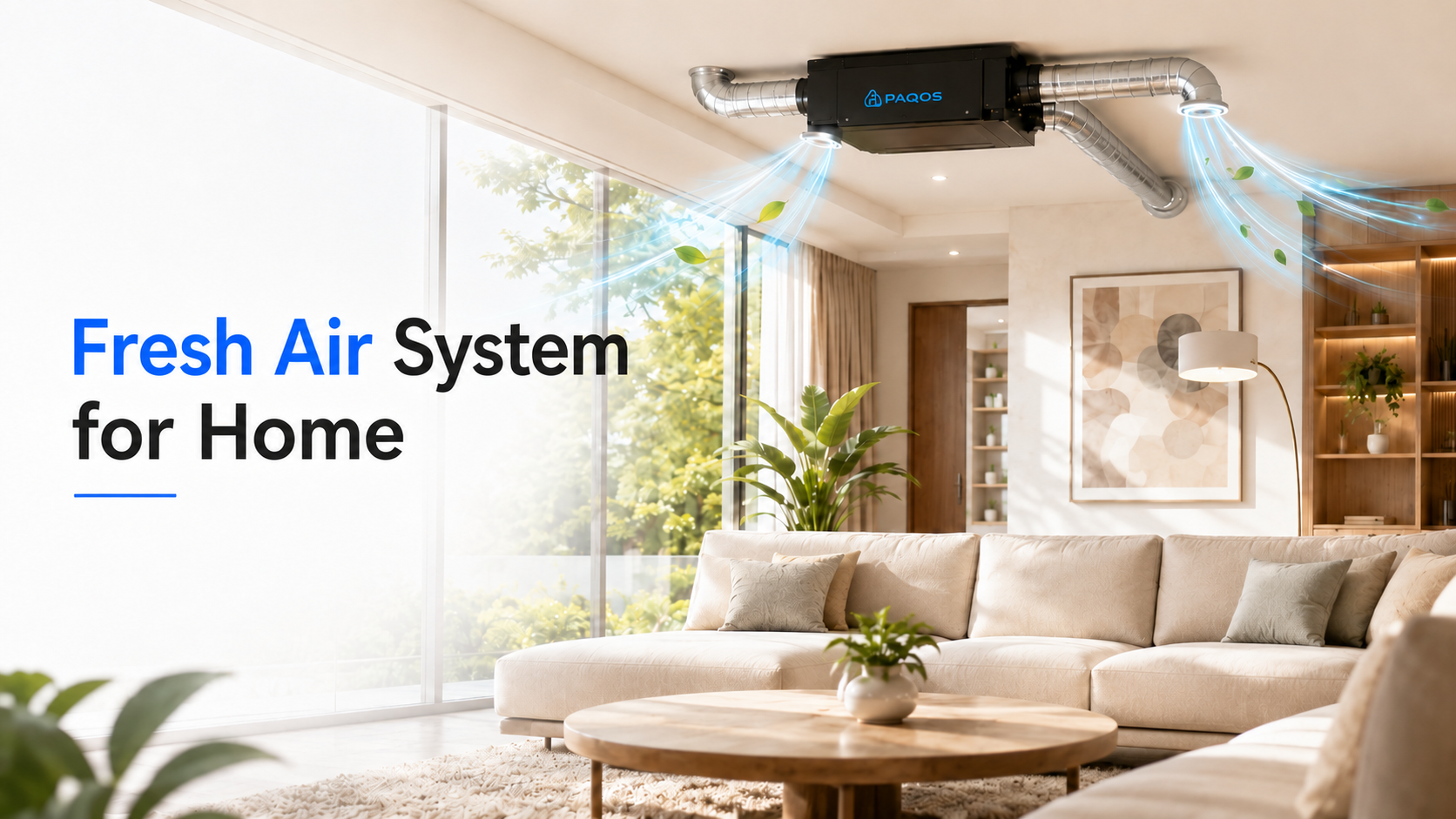
Quick answer: An Indoor Fresh Air System, also called an Energy Recovery Ventilator (ERV), is a balanced ventilation system that brings filtered fresh air indoors while removing stale air. It recovers heat and moisture from outgoing air, improving indoor air quality without overloading your heating or cooling system.
Most of us spend close to 90% of our time indoors, yet rarely think about the air filling our homes, offices, and bedrooms. Modern buildings are sealed tight to save energy, but that same sealing traps carbon dioxide, dust, odors, and moisture inside. Indoor Fresh Air System (ERV): Fresh Air for Modern Living The result? Stuffy rooms, afternoon fatigue, and air that slowly runs out of oxygen.
Indoor Fresh Air System (ERV): Fresh Air for Modern Living changes that. Instead of recycling the same stale air, it constantly swaps it for clean outdoor air—filtered, comfortable, and energy-smart. This guide explains what an Indoor Fresh Air System is, how an ERV works, the benefits it offers, and how it compares to normal ventilation and air purifiers. By the end, you’ll know whether this solution fits your home or workspace.
What Is an Indoor Fresh Air System?
An Indoor Fresh Air System is a balanced ventilation setup built around an Energy Recovery Ventilator (ERV). It performs two jobs at once: it pulls fresh outdoor air inside and pushes stale indoor air out. During this exchange, it recovers energy from the air leaving your home and uses it to treat the incoming air.
Why does that matter? Because a standard fan or open window throws away the cooling or heating you’ve already paid for. An ERV holds onto that energy, so you get continuous fresh air without spiking your electricity bill. The U.S. Department of Energy notes that energy recovery ventilation provides controlled, whole-home ventilation while minimizing energy loss—exactly what tightly sealed modern buildings need.
If you want to explore the full range of options, PAQOS offers a complete lineup of Indoor Fresh Air System ERV units sized for different spaces, alongside other PAQOS Air Solutions designed for healthier indoor living.
Why Does Indoor Air Need Fresh Air Ventilation?
Sealed homes and offices keep your conditioned air in, but they also lock pollutants in. Without proper airflow, indoor spaces become storage units for everything you’d rather not breathe.
Here’s what builds up in a closed room:
- Carbon dioxide (CO₂): Every person exhales it. In a sealed bedroom or meeting room, levels climb fast and leave you groggy.
- VOCs: Paints, new furniture, and cleaning products release these chemicals over time.
- Dust and PM2.5: Fine particles drift in and settle, with no way out unless they’re flushed.
- Excess moisture: Trapped humidity feeds mold and damages walls.
- Odors: Cooking smells and pet odors linger far longer than they should.
ASHRAE, the leading authority on building air standards, identifies ventilation as a core requirement for acceptable indoor air quality. You can read more in the ASHRAE indoor air quality standards. The U.S. Environmental Protection Agency reinforces this, with its EPA indoor air quality guide noting that indoor air can carry higher pollutant concentrations than outdoor air. Adding a proper fresh air ventilation system is the most direct way to address this.
How Does an ERV System Work?
An ERV runs a simple but smart cycle. It draws fresh outdoor air in and sends stale indoor air out at the same time. The clever part happens in between.
As the two air streams pass through the energy recovery core, the system transfers heat and moisture between them—without mixing the air itself. Here’s how that plays out:
- In summer: Hot, humid incoming air is pre-cooled and dried using your cooler indoor air on its way out.
- In winter: Cold incoming air is pre-warmed using the heat from the air leaving your home.
The fresh air also passes through filters that capture dust, pollen, and fine particles before it reaches your rooms. So you get air that’s not only fresh, but clean and comfortable. Because the system reuses energy that would otherwise be wasted, your air conditioner or heater works less. To see how this fits into a full setup for living spaces, take a look at this guide to a ventilation system for home.
Benefits of an Indoor Fresh Air System
Installing an Indoor Fresh Air System delivers value you can feel every day. Here’s what it brings to your space:
- Continuous fresh air: A steady supply of oxygen-rich outdoor air, around the clock.
- Cleaner air: Stale air, odors, and airborne pollutants are pushed out, not recycled.
- Balanced humidity: The system helps regulate moisture, reducing the risk of mold and dampness.
- Better comfort: Pre-treated incoming air keeps rooms feeling pleasant in every season.
- Lower energy loss: Compared to opening windows or running basic exhaust fans, an ERV recovers energy and protects your HVAC investment.
- Versatile use: It works in homes, offices, clinics, showrooms, schools, hotels, and commercial buildings.
The Department of Energy’s Energy.gov ventilation guide explains that energy recovery ventilation offers controlled home ventilation while keeping energy waste to a minimum—a benefit that pays off month after month.
ERV vs Normal Ventilation vs Air Purifier
People often confuse these three, but they do very different things. Choosing the right one depends on what problem you’re trying to solve.
Normal ventilation
Basic ventilation simply brings outdoor air in and pushes indoor air out. It does the job of air exchange, but it throws away the energy in your conditioned air. That means higher cooling and heating bills, especially in extreme weather.
Air purifier
An air purifier cleans the same air over and over inside one room. It traps dust and particles well, but it cannot bring in fresh oxygen or remove carbon dioxide. Run one in a sealed room, and the air stays dust-free but still goes stale.
ERV (Indoor Fresh Air System)
An ERV does what the other two can’t do together. It replaces stale air with fresh outdoor air, filters out pollutants, helps balance humidity, and recovers energy in the process. Think of normal ventilation as opening a window, and an air purifier as cleaning the air in place. An ERV combines fresh-air exchange with energy efficiency.
Which should you choose? If you only want to trap dust in a single room, an air purifier may be enough. But if you want healthier air throughout your whole home or office—with CO₂ removal, humidity control, and lower energy waste—an Indoor Fresh Air System is the more complete choice.
Where Can You Use an Indoor Fresh Air System?
The need for fresh air isn’t limited to luxury homes. An Indoor Fresh Air System suits almost any indoor space where people spend time:
- Homes and apartments: Combat cooking fumes, CO₂, and chemical off-gassing from furniture.
- Offices: Reduce afternoon fatigue and support sharper focus in crowded meeting rooms.
- Hospitals and clinics: Maintain cleaner air for vulnerable patients.
- Schools: Help students concentrate by keeping CO₂ levels in check.
- Hotels: Keep guest rooms fresh and odor-free.
- Showrooms and commercial buildings: Provide comfortable air for staff and visitors alike.
- Premium indoor spaces: Deliver consistent, high-quality air where comfort is expected.
For workplaces in particular, a dedicated ERV system for office handles the rapid CO₂ buildup that happens when many people share one room.
Why Choose PAQOS Indoor Fresh Air System?
PAQOS focuses on creating healthier indoor environments through smart air and water solutions. With an Indoor Fresh Air System, PAQOS helps improve air movement, indoor freshness, and comfort, making your space feel cleaner, healthier, and more breathable.
What sets the PAQOS approach apart:
- Multi-stage filtration: Pre-filters and HEPA-grade filters capture dust, pollen, PM2.5, and fine particles before air enters your space.
- Energy-saving design: High-efficiency brushless DC motors keep power consumption low and operation quiet.
- Smart monitoring: Sensors track indoor air quality and adjust airflow automatically.
- Flexible sizing: Units are available for spaces ranging from compact apartments to large commercial buildings.
Whether you’re outfitting a new home or upgrading an existing office, PAQOS offers a full ventilation system range to match your space and goals.
Frequently Asked Questions
Is an Indoor Fresh Air System better than an air purifier?
For complete indoor air health, yes. An air purifier only cleans the air already in a room and cannot remove CO₂ or supply oxygen. An Indoor Fresh Air System (ERV) brings in fresh, filtered outdoor air while removing stale air—offering a more complete solution. An air purifier works best as a supplement, not a replacement.
Does an ERV increase electricity bills?
Not significantly. An Energy Recovery Ventilator is designed to recover heat and moisture from outgoing air, which reduces the load on your air conditioner or heater. According to the Department of Energy, this energy recovery helps minimize energy loss, often offsetting the system’s running cost.
Can an Indoor Fresh Air System be installed in an existing building?
Yes. While it’s easiest to plan ventilation during construction, wall-mounted and retrofit ducted ERV units are available for existing homes and offices, usually with minimal disruption.
Who needs an Indoor Fresh Air System the most?
Families with young children or elderly members, anyone with respiratory sensitivities, residents of newly renovated spaces with high VOC levels, and busy offices with crowded rooms all benefit most. It’s also valuable in areas with high outdoor pollution, where opening windows isn’t a safe option.
How often do ERV filters need replacement?
It depends on your local air quality. As a general rule, check filters every three months and replace them every 6 to 12 months. A clogged filter restricts airflow and forces the system to work harder, lowering efficiency.
Breathe Easier, Live Healthier
The air inside your home or office shapes your health, sleep, focus, and comfort more than most people realize. Relying on recycled, stale air is a quiet compromise—one you can fix. An Indoor Fresh Air System gives you continuous fresh air, cleaner breathing, balanced humidity, and real energy savings, all in one solution.
If you’re ready to upgrade the air you breathe every day, connect with PAQOS to explore the right Indoor Fresh Air System for your home or office.