

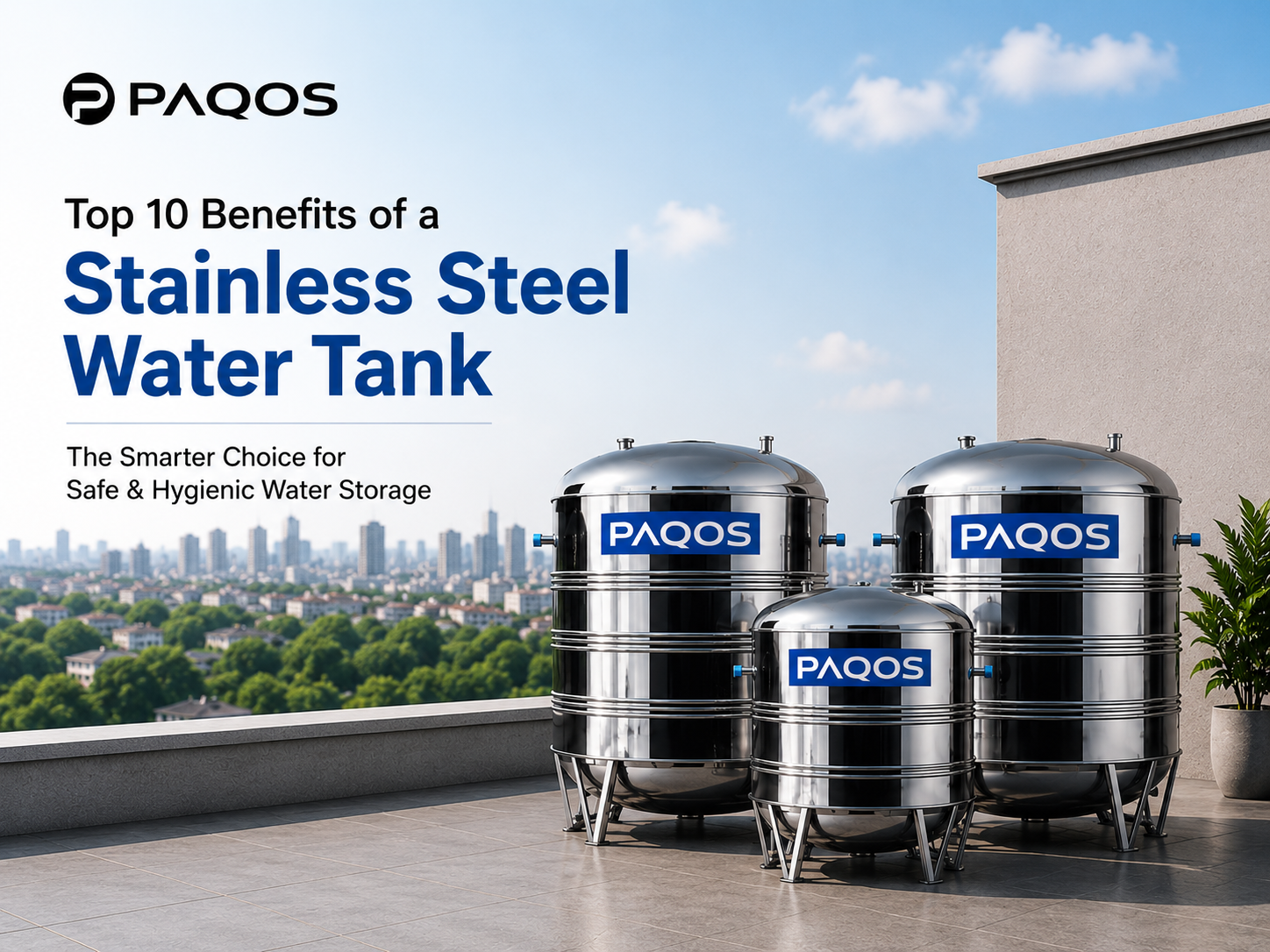
Quick answer: Stainless steel water tanks outperform plastic and concrete alternatives in hygiene, durability, and long-term cost-efficiency. They resist rust and bacteria, maintain water quality, and last decades with minimal maintenance—making them the preferred choice for homeowners, builders, and commercial property owners.
Water storage is one of those infrastructure decisions that quietly affects your daily life for years—sometimes decades. The tank you choose determines the quality of water your family drinks, the frequency of repairs you’ll face, and ultimately, how much you’ll spend over time.
Plastic tanks have long dominated the market due to their low upfront cost. But homeowners and builders across India are increasingly shifting to stainless steel water tanks as a smarter long-term investment. They’re cleaner, tougher, and far more reliable.
This post covers the top 10 stainless steel tank benefits, compares them head-to-head against plastic alternatives, and helps you choose the right tank for your home or property.
Why Water Tank Material Matters More Than You Think
The material of your water storage tank directly influences water purity. Plastic tanks, particularly those made from low-grade polymers, can leach chemicals into stored water—especially under prolonged sun exposure. Concrete tanks, while durable, are prone to seepage, algae growth, and microbial contamination.
A stainless steel water storage tank eliminates most of these concerns by design. The material is inert, non-porous, and resistant to corrosion—qualities that translate directly into safer, cleaner water.
The Top 10 Benefits of Installing a Stainless Steel Water Tank
1. Superior Water Quality
Stainless steel does not react with water. This means no chemical leaching, no metallic taste, and no contamination from the tank walls. For families relying on stored water for drinking and cooking, this is a non-negotiable advantage.
Plastic tanks, by contrast, can degrade over time—releasing microplastics and BPA compounds into the water. A rust-resistant water tank made from food-grade stainless steel keeps your stored water as clean as the day it was collected.
2. Excellent Hygiene and Bacteria Resistance
Bacteria thrive in porous, uneven surfaces. The smooth, non-porous inner surface of an SS water tank doesn’t give microorganisms anywhere to attach and multiply. This significantly reduces the risk of waterborne diseases—a major concern for residential and commercial users alike.
Algae formation, another common problem with plastic and concrete tanks exposed to sunlight, is also greatly reduced with stainless steel construction.
3. Exceptional Durability
A high-quality stainless steel tank won’t crack, warp, or break under normal use. It handles physical stress far better than plastic, which becomes brittle with age—especially in regions with intense heat or temperature fluctuations.
Properly installed stainless steel tanks can last 20–30 years or more, compared to the 5–10 year average lifespan of standard plastic tanks. That’s a meaningful difference in the total cost of ownership.
4. Corrosion and Rust Resistance
Standard steel rusts. Stainless steel doesn’t—thanks to its chromium content, which forms a passive oxide layer on the surface. This makes a rust-resistant water tank suitable for coastal areas, hard water conditions, and regions with highly mineralized groundwater.
The structural integrity of the tank remains intact regardless of what type of water it stores, making it a reliable durable water storage solution across diverse environments.
5. Long-Term Cost Savings
The upfront cost of a premium water tank in stainless steel is higher than plastic. But the math changes quickly when you factor in longevity and maintenance.
- Fewer replacements over 20+ years
- Minimal repair costs due to structural strength
- No need for chemical treatments to address bacterial growth
- Lower cleaning frequency
Over a 15-year period, a stainless steel tank often proves significantly more cost-effective than replacing plastic tanks every 5–7 years.
6. Eco-Friendly and Sustainable
Stainless steel is 100% recyclable. At the end of its useful life, a stainless steel tank generates no landfill waste—the material is fully recovered and repurposed. Plastic tanks, on the other hand, contribute to India’s growing plastic waste challenge Stainless Steel Water Tank
For homeowners and businesses committed to sustainable practices, choosing a stainless steel water storage tank is a direct, measurable environmental decision.
7. Temperature Resistance
Extreme heat accelerates chemical leaching in plastic tanks and can cause structural warping. Stainless steel handles both high and low temperatures without degrading—protecting stored water quality year-round.
This makes SS water tanks particularly well-suited for regions like Rajasthan, Tamil Nadu, and Maharashtra, where summer temperatures regularly exceed 40°C.
8. Low Maintenance Requirements
Cleaning a stainless steel tank is straightforward. The smooth, stain-resistant surface requires nothing more than a periodic rinse or mild cleaning solution. There’s no scrubbing stubborn algae off rough plastic walls, and no resealing concrete joints.
Lower maintenance frequency translates directly into lower maintenance costs—and less disruption to your household or business.
9. Strong and Secure Construction
Stainless steel tanks are structurally engineered to handle large volumes of water safely. Whether you need a water tank for home use with a 500-liter capacity or a 50,000-liter commercial installation, stainless steel offers the structural integrity to handle the load without deformation Stainless Steel Water Tank.
This makes them ideal for rooftop installations, underground setups, and high-capacity commercial or industrial applications.
10. Enhances Property Value
A stainless steel tank signals quality. For homeowners looking to sell, for builders pitching premium developments, or for commercial property managers maintaining infrastructure standards, a premium water tank adds visible value.
It communicates that the property owner has made thoughtful, long-term infrastructure decisions—an increasingly important consideration for discerning buyers Stainless Steel Water Tank.
Stainless Steel Water Tank vs Plastic Water Tank
| Feature | Stainless Steel Tank | Plastic Tank |
| Hygiene | Non-porous, bacteria-resistant | Porous, prone to algae/bacteria |
| Lifespan | 20–30+ years | 5–10 years |
| Maintenance | Low | Moderate to high |
| Temperature resistance | Excellent | Poor (warps in heat) |
| Environmental impact | 100% recyclable | Landfill waste |
| Upfront cost | Higher | Lower |
| Long-term cost | Lower | Higher |
The comparison is clear: plastic tanks cost less on day one. Stainless steel tanks cost less over a lifetime.
How to Choose the Right Stainless Steel Water Tank
Not all stainless steel tanks are built the same. Here’s what to evaluate before purchasing:
- Tank capacity: Calculate your daily water usage and storage needs. A family of four in India typically requires 500–1,000 liters of daily storage.
- Grade of stainless steel: Look for food-grade 304 or 316 stainless steel. Grade 316 offers superior corrosion resistance for coastal or hard-water environments.
- Installation location: Rooftop tanks require lighter, modular designs; underground tanks need higher structural ratings.
- Manufacturer reputation: Choose a manufacturer with proven quality standards, certifications, and a track record in the Indian market.
- Warranty and after-sales support: A confident manufacturer backs their product. Look for a minimum 5-year warranty on materials and workmanship.
Why Choose Paqos Stainless Steel Water Tanks
Paqos stainless steel water tanks are engineered for the demands of Indian homes, commercial buildings, and industrial facilities. Built from premium-grade stainless steel, Paqos tanks deliver:
- Hygienic water storage with a smooth, non-porous inner surface
- Long-lasting performance resistant to corrosion, rust, and UV degradation
- Low maintenance construction that keeps operating costs minimal
- High durability to handle India’s climate extremes—from intense monsoon rains to peak summer heat
For homeowners, builders, and architects seeking a reliable, long-term durable water storage solution, Paqos provides the quality and peace of mind that plastic simply can’t match.
Make the Switch to Smarter Water Storage
A stainless steel water tank delivers on every dimension that matters: water purity, structural strength, low maintenance, environmental responsibility, and long-term value. The initial investment is higher, but the returns—measured in clean water, reduced costs, and fewer headaches—accumulate year after year.
For anyone building or upgrading a home, commercial property, or industrial facility, switching to a stainless steel water storage tank is one of the most practical infrastructure decisions you can make.
Explore Paqos Stainless Steel Water Tanks to find the right capacity and configuration for your needs—and invest in water storage built to last.
Frequently Asked Questions
How long does a stainless steel water tank last?
A well-manufactured stainless steel water tank typically lasts 20–30 years or more with proper care. This is significantly longer than plastic tanks, which usually need replacement every 5–10 years depending on climate and usage conditions.
Is a stainless steel water tank better than a plastic water tank?
For most applications, yes. Stainless steel tanks outperform plastic tanks in hygiene, durability, temperature resistance, and long-term cost efficiency. Plastic tanks have a lower upfront cost, but stainless steel tanks offer better value over a 10–20 year horizon.
Does stainless steel affect water quality?
Food-grade stainless steel (Grade 304 or 316) does not react with water and does not leach chemicals or metals. It is one of the most inert materials available for water storage, making it ideal for drinking water applications.
How often should a stainless steel water tank be cleaned?
Most manufacturers and health authorities recommend cleaning a stainless steel water tank every 6–12 months. The smooth, non-porous surface makes cleaning quick and straightforward—typically requiring only a rinse and mild cleaning solution.
What size stainless steel water tank is suitable for a home?
The right size depends on your household’s daily water consumption and local supply reliability. A standard family of four in India typically needs 500–1,000 liters of storage capacity. If water supply is intermittent, consider a larger tank (1,500–3,000 liters) to ensure continuous availability.