

Quick answer: SS water tank vs plastic tank is one of the most common comparisons Indian homeowners search for when choosing the right water storage solution. While plastic water tanks are affordable and commonly used, SS water tanks are becoming a better choice for homes that want better hygiene, durability, heat resistance, and long-term value.
home use, an SS water tank is better than a plastic tank. Stainless steel offers superior hygiene, durability, and heat resistance—especially on Indian rooftops. Plastic tanks cost less upfront but may need more maintenance and earlier replacement, making them less cost-effective over time.
Most Indian homes have a water tank sitting on the rooftop. It stores water for cooking, bathing, and daily household needs. But here’s what many families don’t think about: the material of that tank directly affects the quality of the water inside it.
Plastic tanks have been the go-to choice for decades. They’re affordable, lightweight, and easy to install. But as more homeowners start asking harder questions—about hygiene, heat resistance, and long-term value—the SS water tank for home is becoming an increasingly popular answer.
So which one is actually better for Indian homes? This guide breaks down the comparison across every factor that matters: hygiene, durability, heat performance, maintenance, and price. By the end, you’ll have a clear answer based on your needs and budget.
What Is an SS Water Tank?
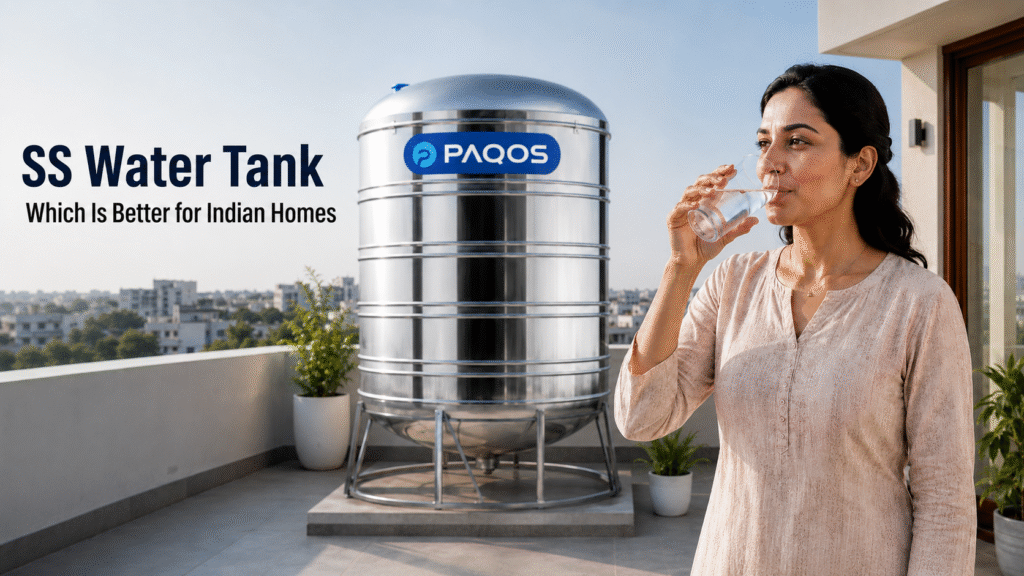
An SS water tank—short for stainless steel water tank—is a water storage unit made from food-grade stainless steel. It is used in homes, apartments, villas, hospitals, hotels, and commercial buildings to store water for daily use.
Stainless steel is valued for its strength, corrosion resistance, and smooth non-porous surface. These properties make SS water tanks well-suited for clean water storage, particularly where hygiene and long service life are priorities. According to Beltecno India, stainless steel tanks are widely preferred for long-term structural reliability because steel resists UV-related degradation and stays rigid over time.
When shopping for an SS water tank, look for products that meet Bureau of Indian Standards (BIS) certification. BIS is India’s national standards body, and certified tanks meet defined quality and safety benchmarks for water storage.
Explore our range of SS water tanks for home to find the right capacity and grade for your household.
What Is a Plastic Water Tank?
A plastic water tank is made from polyethylene or similar materials. It is the most common type of water storage tank used in Indian homes, largely because of its low price and easy availability.
Plastic tanks are lightweight, come in many sizes, and are simple to install on rooftops. For families on a tight budget or those looking for a temporary solution, plastic tanks make practical sense.
However, plastic tanks do have limitations. According to the CDC’s safe water storage guidelines, stored water containers should be kept in cool places and away from direct sunlight. This is a challenge for rooftop plastic tanks in India, which are exposed to intense sun for hours each day. Without proper placement or shading, a plastic tank can heat up quickly—and warm, stagnant water is more prone to contamination.
Check out our water tank cleaning guide to learn how to keep any tank clean and hygienic year-round.
SS Water Tank vs Plastic Tank: Quick Comparison Table
| Factor | SS Water Tank | Plastic Water Tank |
|---|---|---|
| Hygiene | Smooth surface, easier to clean, less likely to harbour contaminants | Needs regular cleaning; can develop odour or algae over time |
| Durability | Long-lasting, resists UV degradation | Can weaken with prolonged sun and heat exposure |
| Heat Resistance | Better suited for Indian rooftop conditions | Heats up faster under direct sunlight |
| Maintenance | Low maintenance due to smooth surface | Requires more frequent inspection and cleaning |
| Appearance | Premium, modern look | Basic appearance |
| Upfront Cost | Higher initial cost | Lower initial cost |
| Long-Term Value | Better — fewer replacements needed | May need earlier replacement depending on conditions |
| Sustainability | 100% recyclable | Harder to recycle; environmental concerns at end of life |
How Do SS and Plastic Tanks Compare on Hygiene and Water Quality?
For Indian families, the question is not only which tank is cheaper—it’s which tank keeps stored water cleaner for daily use.
This is where the SS water tank has a clear advantage. Stainless steel’s smooth, non-porous surface does not absorb odors, does not develop bacterial films as easily, and is simpler to clean thoroughly. According to Beltecno India, stainless steel’s smooth surface is a major hygiene advantage because it’s easier to clean and less likely to harbour contaminants.
Plastic tanks, on the other hand, can develop algae growth, absorb odors over time, and collect sediment in corners and crevices—especially if cleaning is not done on a regular schedule.
The IndiKit guidelines on household water treatment and safe storage emphasize that once water has been treated, the storage container must protect it from re-contamination. A tank material that is harder to clean increases that risk.
If your family uses stored water for cooking or drinking-related purposes, tank hygiene is not a minor detail. It is a daily health concern.
Which Tank Lasts Longer: Stainless Steel or Plastic?
Durability comes down to how well the material holds up under the conditions it faces. Indian rooftops are harsh environments—intense sunlight, temperature swings, and occasional rain.
Stainless steel handles all of this well. It resists UV radiation, does not become brittle with age, and maintains its structural integrity for many years. Beltecno India notes that stainless steel tanks resist UV-related degradation and stay rigid over time, making them a strong choice for long-term water storage.
Plastic tanks are durable enough in protected conditions, but prolonged UV exposure and heat can cause the material to degrade over time. This can lead to discoloration, surface cracking, or weakening of the tank wall—concerns that become more relevant the longer the tank sits on an exposed rooftop.
For homeowners who want a clean water storage solution that doesn’t require frequent replacement, stainless steel is the more reliable option.
How Does Tank Material Perform Under Indian Heat and Sunlight?
India’s summer temperatures regularly exceed 40°C in many states. Rooftops absorb and radiate this heat directly. The material of your tank determines how much of that heat gets transferred to the stored water.
Plastic tanks heat up faster when placed under direct sunlight. Hot stored water is not just uncomfortable to use—it can accelerate bacterial growth if the tank is not properly sealed and cleaned. The CDC recommends storing water containers in cool places and away from direct sunlight to prevent contamination.
SS water tanks handle heat better. Stainless steel does not absorb heat as aggressively as plastic, and the material’s structural strength is not compromised by repeated heating and cooling cycles.
If your rooftop tank has no shading or overhead cover, tank material becomes even more important. For guidance on making the right choice based on your local climate, visit our best water tank for Indian weather page.
What Are the Best Practices for Maintaining a Water Tank at Home?
Every water tank—regardless of material—needs regular cleaning. But the frequency and ease of that cleaning depends on what the tank is made of.
SS water tanks are easier to clean because their smooth interior surface does not trap dirt or encourage biofilm formation. Plastic tanks can develop algae, odor buildup, and sediment deposits, particularly if cleaning is delayed.
Here are five basic maintenance steps every homeowner should follow:
- Clean the tank regularly — at least once every six months, or more frequently if water quality seems off.
- Keep the lid properly closed — an open or loose lid allows dust, insects, and contamination to enter.
- Avoid direct sunlight exposure where possible — shade the tank or use a UV-resistant cover.
- Inspect inlet and outlet fittings — check for leaks, blockages, or wear at connection points.
- Act on early warning signs — if water smells unusual, looks discolored, or you notice algae, clean the tank immediately.
For a detailed step-by-step process on how to clean water tank at home, read our full water tank cleaning guide.
SS Water Tank vs Plastic Tank: What Is the Price Difference?
This is where plastic tanks have an obvious advantage. The upfront cost of a plastic water tank is lower. That’s a straightforward fact, and for many budget-conscious buyers, it’s the deciding factor.
But price comparisons that stop at the purchase price can be misleading. Beltecno India frames this clearly: stainless steel tanks often justify the higher upfront cost with a longer lifespan and reduced replacement frequency, which can lower the total cost of ownership over time.
If your priority is only low initial cost, a plastic water tank may look attractive. But if your priority is clean storage, premium quality, and long-term usage, an SS water tank can be a better investment for Indian homes.
You can explore current SS water tank price options to find a capacity and grade that fits your budget without compromising on quality.
Which Water Tank Should Indian Homes Choose?
The right choice depends on your priorities, budget, and rooftop conditions. Here’s how to think about it clearly.
Choose a Plastic Tank If:
- Your budget is limited and you need an affordable solution right now
- The tank will be installed in a shaded or covered area
- You only need temporary or short-term water storage
- You are comfortable with a more hands-on maintenance routine
Choose an SS Water Tank If:
- You want better hygiene and cleaner stored water for daily family use
- Your rooftop has direct sun exposure for long hours
- You prefer low maintenance and fewer long-term worries
- You want a tank that offers strong long-term value without frequent replacement
- Quality and durability matter more than the lowest possible upfront cost
For most Indian homes—especially those storing water for cooking, bathing, and daily drinking-related use—the SS water tank is the more practical and hygiene-focused choice. Learn more about stainless steel water tank benefits before making your decision.
The Smart Choice for Long-Term Water Storage in Indian Homes
Plastic tanks may save money today, but an SS water tank protects your water quality for years. For Indian families who care about hygiene, durability, and safe water storage, stainless steel is a smarter long-term choice.
The real cost of a water tank isn’t just what you pay at purchase. It’s how often you need to clean it, repair it, or replace it—and what quality of water it delivers to your family every single day. On all of those measures, an SS water tank for home comes out ahead.
If you’re ready to upgrade your water storage, explore our range of high-quality SS water tanks built for Indian homes and rooftop conditions. Clean water storage starts with the right tank.
Frequently Asked Questions
Is an SS water tank better than a plastic tank for home use?
Yes, an SS water tank is generally better for home use when hygiene, durability, and long-term value are the priorities. Stainless steel resists UV degradation, is easier to clean, and maintains water quality more reliably than plastic. Plastic tanks are better suited for low-budget or temporary storage needs.
Is a stainless steel water tank safe for storing drinking water?
A stainless steel water tank is widely considered a safe and appropriate option for clean water storage. Its smooth, non-porous surface does not absorb odors, does not corrode, and is easier to sanitize than many plastic alternatives—making it suitable for households that store water used in cooking and drinking.
Which water tank is best for Indian homes overall?
For long-term use, an SS water tank is the better option for Indian homes. It handles heat, UV exposure, and rooftop conditions more effectively than plastic, and requires less intensive maintenance over time. For short-term or low-budget requirements, a plastic tank remains a practical choice.
Does a plastic water tank heat water on the rooftop?
Yes. Plastic tanks placed on exposed rooftops can absorb heat from direct sunlight and warm the stored water. According to the CDC’s safe water storage guidelines, water containers should ideally be kept in cool places and away from direct sunlight. This is difficult to achieve with rooftop plastic tanks in Indian summers.
Is an SS water tank more expensive than a plastic tank?
Yes, SS water tanks have a higher upfront cost than plastic tanks. However, their longer lifespan, lower maintenance requirements, and fewer replacement cycles mean they can offer better long-term value. For homeowners planning to stay in their home for many years, the higher initial investment often makes financial sense.