

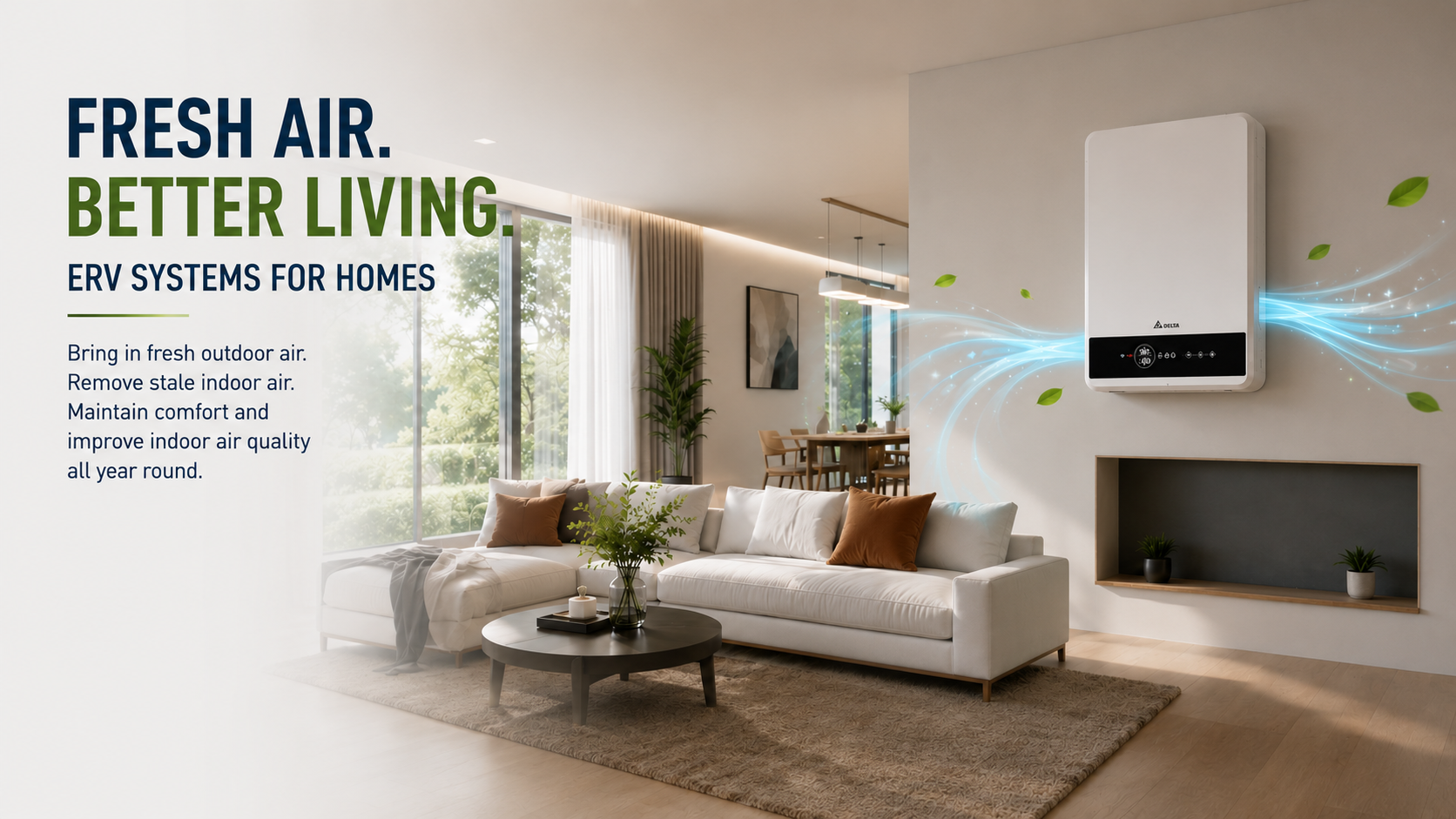
ERV System For Homes Modern homes are built tighter than ever before. Better insulation, sealed windows, and energy-efficient construction keep heating and cooling bills low, but they also trap stale air, moisture, and pollutants inside your living space. This is where an ERV system becomes essential. An Energy Recovery Ventilator, commonly known as an ERV, is a mechanical ventilation solution designed to bring fresh outdoor air into your home while expelling stale indoor air, all without wasting the energy you have already paid to heat or cool your space.
In this blog, we will explore what this ventilation solution is, how it works, and why it has become one of the most effective tools for improving indoor air quality in residential homes today.
What Is an ERV System?
An ERV system is a whole-home ventilation device that continuously exchanges indoor air with outdoor air. Unlike simply opening a window, which lets in unfiltered air and causes temperature swings, an ERV uses a core exchanger to transfer both heat and humidity between the incoming and outgoing air streams. This means that during winter, the cold fresh air entering your home is pre-warmed by the heat from the air leaving your home. During summer, the reverse happens, keeping incoming air cooler and less humid ERV System For Homes.
The result is a home that receives a constant supply of clean, filtered outdoor air without the huge energy penalty that would normally come from ventilating a tightly sealed house.
How Does an ERV System Work?
At its core, the unit operates through two separate air streams that never physically mix but pass close enough to exchange energy. Here is a simplified breakdown of the process:
- Stale air extraction – Air from bathrooms, kitchens, and other high-humidity areas is pulled out of the home.
- Fresh air intake – Simultaneously, fresh outdoor air is drawn in through a separate duct.
- Energy exchange – Both air streams pass through a heat and moisture exchange core, where temperature and humidity are transferred from one stream to the other.
- Filtered delivery – The incoming fresh air passes through filters before being distributed throughout the home via ductwork.
Because both stale and fresh air pass through the unit at the same time, this type of ventilator recovers a significant portion of the energy that would otherwise be lost through standard exhaust fans or open windows.
Why Indoor Air Quality Matters
Before diving deeper into the benefits, it helps to understand why indoor air quality is such a pressing concern. According to various environmental health studies, indoor air can be significantly more polluted than outdoor air due to trapped contaminants such as dust, pet dander, mold spores, volatile organic compounds from paint and furniture, cooking fumes, and excess humidity. Since most people spend the majority of their time indoors, poor air quality can contribute to allergies, respiratory issues, fatigue, and long-term health problems ERV System For Homes.
An ERV system directly addresses this problem by ensuring a steady exchange of air, diluting indoor pollutants, and preventing the buildup of moisture that leads to mold growth.
Key Benefits of an ERV System for Homes
1. Continuous Fresh Air Supply
The most obvious advantage of an ERV system is the constant introduction of fresh, filtered outdoor air. Unlike natural ventilation, which depends on unpredictable factors like wind and open windows, an ERV runs continuously and consistently, ensuring your home always has a healthy air exchange rate.
2. Balanced Humidity Control
Excess indoor humidity is one of the leading causes of mold, mildew, and musty odors. This ventilation system helps regulate humidity levels by transferring moisture between incoming and outgoing air streams. In humid climates, this prevents overly damp air from entering the home. In dry winter climates, it helps retain some humidity so indoor air doesn’t become uncomfortably dry.
3. Energy Efficiency
Because this type of unit recovers both heat and moisture before exhausting stale air, your HVAC system does not have to work as hard to condition incoming fresh air. This translates directly into lower energy bills while still maintaining excellent ventilation, a balance that traditional exhaust-only ventilation simply cannot achieve.
4. Reduction of Indoor Pollutants
By continuously diluting and replacing indoor air, this ventilation solution reduces the concentration of common household pollutants, including volatile organic compounds, carbon dioxide buildup, cooking odors, and airborne allergens. This creates a noticeably fresher and healthier living environment.
5. Mold and Mildew Prevention
Since moisture control is one of the core functions of this kind of system, homes equipped with one are far less prone to the kind of persistent dampness that leads to mold growth behind walls, in bathrooms, and around windows. This is particularly valuable in tightly sealed, energy-efficient homes where moisture has fewer natural escape routes ERV System For Homes .
6. Quieter, More Consistent Comfort
Because the incoming air is pre-conditioned before it enters the living space, this ventilation unit helps maintain more stable indoor temperatures. This reduces the strain on your furnace or air conditioner and creates a more comfortable, draft-free environment year-round.
ERV vs HRV: What Is the Difference?
A common point of confusion is the difference between an ERV and an HRV (Heat Recovery Ventilator). Both devices perform a similar function of exchanging stale indoor air for fresh outdoor air while recovering energy. The key difference is that an HRV only transfers heat, while an ERV system transfers both heat and moisture.
This makes this type of ventilator generally the better choice for homes in climates with significant humidity swings, whether that means humid summers, dry winters, or both. An HRV may be more suitable in consistently cold, dry climates where retaining extra humidity indoors isn’t a major concern.
Signs Your Home Could Benefit from an ERV System
Not sure if your home needs better ventilation? Watch for these common warning signs:
- Persistent musty or stale odors, even after cleaning
- Condensation on windows during colder months
- Family members experiencing frequent allergy symptoms indoors
- Visible mold or mildew in bathrooms or closets
- A home that feels stuffy despite running the HVAC system
- Recently upgraded insulation or windows that made the home noticeably tighter
If any of these sound familiar, installing one could make a meaningful difference in both comfort and health.
Installation Considerations
Installing an ERV system typically involves connecting the unit to your existing ductwork, or in some cases, running a dedicated duct system for the fresh and stale air pathways. Professional installation is strongly recommended, since proper sizing and duct placement directly affect how efficiently the unit performs. A unit that is too small won’t adequately ventilate the home, while an oversized unit can waste energy and create unnecessary noise.
Homeowners should also consider filter quality when selecting this type of unit. Higher-rated filters capture smaller particles, including pollen and fine dust, further improving the air quality benefits of the unit.
Maintenance Tips
An ERV system requires relatively low maintenance compared to other HVAC components, but a few simple habits will keep it performing at its best:
- Clean or replace filters every three to six months
- Inspect and clean the core exchanger periodically to prevent dust buildup
- Check exterior intake and exhaust vents for blockages, such as leaves or debris
- Schedule an annual professional inspection to ensure optimal airflow balance
Consistent maintenance ensures the unit continues delivering fresh, healthy air without unnecessary strain on the motor or reduced efficiency over time.
Is an ERV System Worth the Investment?
For homeowners concerned about indoor air quality, energy efficiency, and long-term comfort, an ERV system is one of the smartest upgrades available. While the upfront installation cost is a consideration, the combination of healthier air, reduced mold risk, and lower energy waste often makes it a worthwhile long-term investment, especially in newer, tightly sealed homes where natural airflow is limited.
As awareness around indoor air quality continues to grow, more homeowners are turning to this technology as a practical solution that balances health, comfort, and efficiency in one device.
Final Thoughts
Indoor air quality plays a direct role in your family’s health and daily comfort, and in today’s energy-efficient, tightly sealed homes, natural airflow alone is often not enough. An ERV system offers a reliable, energy-conscious way to keep fresh air circulating throughout your home while controlling humidity and reducing indoor pollutants.
Whether you’re dealing with musty odors, excess moisture, or simply want to breathe cleaner air at home, installing this kind of ventilation upgrade is a proactive step toward a healthier indoor environment. By understanding how it works and choosing a properly sized unit for your home, you can enjoy consistent fresh air, better humidity control, and long-term energy savings for years to come.
A Quick Word on Indoor Air Quality Standards
Many health organizations recommend a minimum number of air changes per hour to keep pollutant levels in check, particularly in bedrooms and living areas where people spend the most time. Older homes often achieved this naturally through gaps around doors, windows, and construction seams. Newer homes, built for energy efficiency, rarely have this natural leakage, which is exactly why mechanical ventilation has become a standard recommendation in green building guidelines rather than an optional extra.