

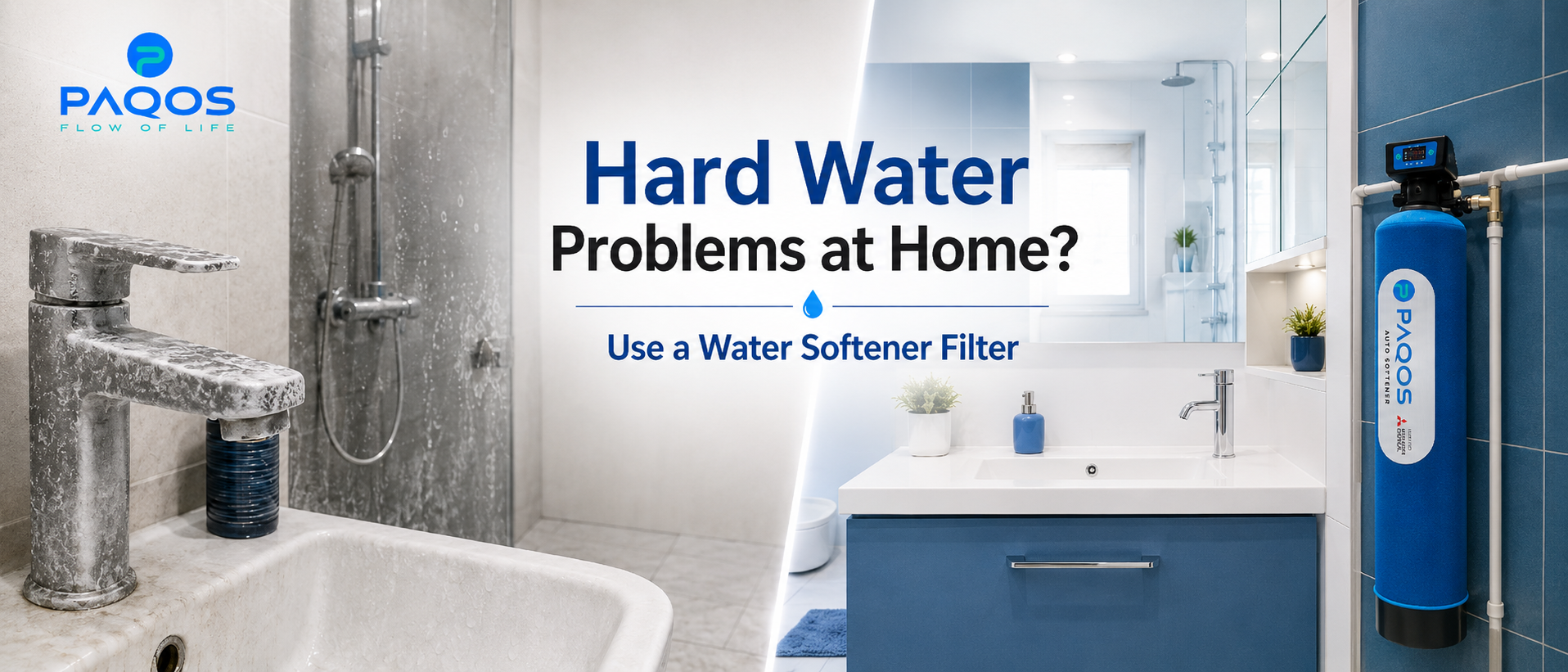
TL;DR: Hard water contains excess calcium and magnesium minerals that cause white stains, dry skin, rough hair, appliance scaling, and dull bathroom fittings. A water softener filter reduces these hardness-causing minerals before water reaches your taps, showers, and appliances—making daily water use more comfortable and protecting your home long-term.
You’ve probably noticed it—white chalky marks around your taps, skin that feels tight after a bath, hair that looks dull no matter what shampoo you use, or a showerhead that seems to lose pressure over time. These are not random issues. In most cases, hard water is the silent cause behind all of them.
Hard water is one of the most common household water problems in India, particularly in cities like Delhi, Bengaluru, Jaipur, and Pune, where groundwater is rich in dissolved minerals. Yet many families spend money on expensive skincare products, frequent plumber visits, and appliance repairs without realizing that the root of the problem is in their water supply.
A water softener filter for home is designed to address exactly this. By reducing hardness-causing minerals before water enters your bathroom, kitchen, or home water line, a water softener filter helps protect your skin, hair, appliances, and fittings—while making everyday tasks like bathing and cleaning noticeably easier.
This guide explains what hard water is, how it affects your home, and why a water softener filter is a smart, long-term solution for Indian households.
What Is Hard Water?
Hard water is water that contains high levels of dissolved minerals—primarily calcium and magnesium. These minerals enter groundwater naturally as it passes through soil and rock formations.
You cannot see these minerals while the water is flowing. But once the water dries on a surface—a tap, a tile, or a glass panel—it leaves behind white or yellowish mineral deposits. Over time, these deposits build up into what is commonly known as limescale or scaling.
Beyond the visible stains, hard water also reduces the effectiveness of soaps and shampoos. The minerals react with soap molecules and prevent them from lathering properly. According to the United States Geological Survey (USGS), water is considered hard when it contains more than 120 milligrams of calcium carbonate per liter. In many Indian cities, water hardness levels exceed this threshold significantly.
What Are the Common Hard Water Problems at Home?
Hard water affects nearly every part of your daily routine. Here is what many Indian homeowners deal with:
- White stains on taps, tiles, glass shower panels, and bathroom fittings that return even after cleaning
- Dry, tight-feeling skin after bathing, because mineral residue is left on the skin’s surface
- Rough, dull, or sticky hair even after using conditioner
- Poor soap and shampoo lather, which means you use more product without better results
- Scaling inside geysers and washing machines, reducing their efficiency and lifespan
- Blocked or low-pressure showerheads, clogged with mineral buildup
- Bathroom fittings losing their shine, appearing dull and stained despite regular cleaning
- Higher maintenance and cleaning costs over time due to repeated scaling and damage
If any of these sound familiar, your home may have a hard water problem worth addressing with a reliable hard water solution for home.
How Does Hard Water Affect Skin and Hair?
This is one of the most underestimated effects of hard water. When you bathe with hard water, calcium and magnesium minerals combine with your soap or body wash to form a film on your skin instead of rinsing away cleanly. This residue can clog pores, disrupt the skin’s natural moisture barrier, and leave skin feeling dry and rough.
The effects on hair are similar. Hard water prevents shampoo from lathering fully, which means hair may not be rinsed clean. Mineral deposits can build up on the scalp and along hair strands, making hair look dull, feel coarse, or tangle more easily.
For families where members already have sensitive skin or scalp conditions, these hard water effects on skin and hair can be noticeably worse. Switching to softer water is often one of the first recommendations dermatologists and trichologists make for unexplained skin dryness or hair dullness.
How Does Hard Water Damage Bathroom Fittings and Appliances?
Scale buildup does more than look unsightly. Inside your geyser, hard water minerals settle on heating elements and form a thick layer of limescale. This insulating layer forces the geyser to work harder and use more electricity to heat water, reducing efficiency and increasing your energy bill.
Inside washing machines, limescale can accumulate in hoses, drums, and valves—leading to blockages, reduced washing performance, and eventually costly repairs. Taps and showerheads lose water flow as mineral deposits narrow the internal passages. Bathroom fittings made of chrome or stainless steel lose their shine and develop surface corrosion from constant exposure to hard water and its mineral residue.
The cumulative cost of these problems—repairs, replacements, professional cleaning, and extra energy usage—is far higher than the cost of installing a water softener system for home from the start.
What Is a Water Softener Filter?
A water softener filter is a water treatment system designed to reduce the concentration of hardness-causing minerals—mainly calcium and magnesium—in your water supply. The result is softer water that is gentler on skin, hair, appliances, and bathroom surfaces.
A hard water softener filter is different from a standard drinking water filter. While a regular filter removes sediment, dust, and impurities, a water softener specifically targets mineral hardness. Many homeowners benefit from using both systems together for complete water quality.
A water softener filter for home is suitable for installation across bathrooms, geysers, washing machines, kitchen utility areas, or at the main water inlet for whole-home coverage.
How Does a Water Softener Filter Work?
The working principle of a water softener filter is straightforward. Hard water enters the system and passes through a specially designed medium—usually ion-exchange resin. This resin attracts and holds calcium and magnesium ions, replacing them with sodium ions that do not cause hardness or scaling.
The output is treated, softened water that flows to your taps, showerhead, geyser, or washing machine. Because the hardness-causing minerals have been significantly reduced, you get water that lathers better, rinses more cleanly, and does not leave behind white stains or scaling.
Some systems are designed for a single bathroom or appliance, while others are built for the entire home water line. A Paqos professional can help you choose the right configuration based on your water hardness level and home size.
What Are the Key Benefits of a Water Softener Filter for Home?
Installing a water softener filter delivers improvements across multiple areas of daily life:
- Reduces white stains on taps, tiles, glass, and fittings
- Improves bathing experience with water that rinses skin and hair more cleanly
- Supports softer skin and smoother-feeling hair by reducing mineral residue
- Improves soap and shampoo lather, reducing product wastage
- Protects bathroom fittings and chrome surfaces from mineral damage
- Extends geyser and washing machine life by reducing internal scaling
- Reduces scaling in pipelines and showerheads, maintaining good water pressure
- Makes bathroom cleaning easier as mineral stains are less likely to form
- Supports long-term home maintenance by reducing repair and replacement needs
Water Softener Filter vs. Normal Water Filter: What Is the Difference?
Many people ask whether a water softener filter and a normal water filter do the same job. They do not. Here is a clear comparison:
| Feature | Water Softener Filter | Normal Water Filter |
|---|---|---|
| Main Purpose | Reduces water hardness | Removes dust, dirt, impurities |
| Best For | Hard water problems | Drinking or basic filtration |
| Helps With Scaling | Yes | Usually no |
| Benefits Skin & Hair | Yes, for bathing water | Limited |
| Protects Appliances | Yes | Limited |
| Use Case | Bathroom, geyser, washing machine, whole home | Drinking water filtration |
For homes dealing with visible hard water problems, a water softener filter is the right solution. For safe drinking water, a standard water filter or purifier is recommended alongside it.
Where Can You Install a Water Softener Filter?
A water softener filter is versatile and can be installed at multiple points in your home:
- Main water inlet for complete home coverage
- Bathroom supply line for better bathing
- Showerhead connection to prevent scaling and blockage
- Geyser water line to protect the heating element
- Washing machine supply line to prevent drum and valve damage
- Kitchen utility area for washing dishes or clothes
- Apartments, villas, farmhouses, and independent homes alike
A complete water solution for home may combine a water softener filter with a pressure booster pump for home or a stainless steel water tank depending on your home’s specific water supply needs.
Signs You May Need a Water Softener Filter at Home
Use this checklist to identify whether hard water is affecting your household:
- ✅ White or yellowish stains around taps, tiles, or glass panels
- ✅ Blocked showerhead or reduced shower pressure
- ✅ Skin feels dry or tight after bathing
- ✅ Hair feels rough, dull, or sticky after washing
- ✅ Soap or shampoo does not lather properly
- ✅ Geyser requires frequent servicing or descaling
- ✅ Bathroom tiles and glass need cleaning again and again
- ✅ Washing machine performance has declined over time
If you checked three or more of the above, a water softner filter (also searched as “water softener filter”) is worth considering for your home.
How to Choose the Right Water Softener Filter for Your Home
Choosing the right water softener system for home depends on several practical factors:
- Test your water hardness level — higher hardness requires a more capable system
- Consider home size — the number of people and bathrooms determines the required capacity
- Assess daily water usage — higher usage means you need a system with adequate flow rate
- Check resin or media quality — good-quality ion-exchange resin lasts longer and performs better
- Opt for professional installation — incorrect installation can reduce effectiveness
- Verify after-sales service — regular maintenance keeps the system performing well
- Check warranty coverage — a good brand stands behind its product
- Choose a brand with proven experience in water treatment solutions
Water Softener Filter Price: What Affects the Cost?
The price of a water filter for hard water varies depending on several factors:
- Capacity — higher-capacity systems designed for whole-home use cost more than single-point systems
- Technology — advanced ion-exchange systems may be priced higher than basic alternatives
- Water hardness level — very hard water may require more robust filtration media
- Home size and number of bathrooms — larger homes need larger systems
- Installation requirements — professional installation adds to the initial cost but ensures long-term reliability
- Service and maintenance plan — ongoing support is a key cost factor to consider
- Brand reputation — established brands may charge a premium but offer better reliability and warranty
Rather than focusing on the lowest upfront price, look at the total value—including appliance protection, reduced maintenance, and long-term comfort.
Why Choose Paqos Water Softener Filter?
Paqos is built around one goal: providing complete, reliable water solutions for modern Indian homes. A Paqos water softener filter is designed with Indian water conditions in mind—high mineral content, variable water pressure, and the diverse needs of apartments, villas, and independent homes.
When you choose Paqos, you get:
- Professional installation handled by trained technicians
- Reliable, consistent water softening suited to your home’s water hardness level
- Protection for skin, hair, bathroom fittings, and appliances in one solution
- Transparent guidance to help you choose the right system for your home’s size and usage
- Ongoing service support to ensure long-term performance
Paqos also offers a broader range of water solutions, including safe water storage solutions and more, so you can address every aspect of your home’s water quality with one trusted brand.
Hard Water Is a Solvable Problem—Start with the Right Filter
Hard water quietly affects your skin, hair, bathroom fittings, appliances, and overall home maintenance costs. The damage is gradual, which is why many families do not connect the cause to the problem until significant wear has already occurred.
A water softener filter for home is a practical, long-term investment that addresses hard water problems at the source. Whether you live in an apartment, a villa, or an independent house, the right water softener system can transform your daily water experience.
Looking for a reliable hard water solution for your home? Explore Paqos Water Softener Filter and protect your skin, hair, bathroom fittings, and appliances from hard water problems.
Frequently Asked Questions
What is a water softener filter?
A water softener filter is a system that reduces hardness-causing minerals—primarily calcium and magnesium—from your water supply. It improves water quality for bathing, washing, cleaning, and appliance protection by delivering softer water to your taps, showerheads, and home appliances.
Is a water softener filter good for home use?
Yes. A water softener filter is particularly useful for homes facing hard water issues such as white mineral stains, dry skin, rough hair, poor soap lather, scaling in geysers, and appliance damage. It is suitable for apartments, villas, farmhouses, and independent homes.
What are the signs of hard water at home?
Common signs include white or chalky stains on taps and tiles, soap or shampoo that does not lather properly, skin that feels dry after bathing, hair that feels dull or rough, blocked showerheads, and geysers that need frequent descaling or servicing.
Does a water softener filter help with skin and hair problems caused by hard water?
Softer water reduces the mineral residue that hard water leaves on skin and hair. This can improve how skin feels after bathing and may reduce dullness or roughness in hair that results from mineral buildup.
What is the difference between a water softener filter and a regular water filter?
A water softener filter primarily reduces water hardness by removing calcium and magnesium minerals. A regular water filter removes sediment, dust, and basic impurities. The two systems serve different purposes and are often used together for complete home water treatment.
Where should a water softener filter be installed?
A water softener filter can be installed at the main home water inlet for whole-home coverage, or at specific points such as the bathroom supply line, geyser inlet, washing machine supply, or kitchen utility area, depending on where hard water problems are most noticeable.
What is the price of a water softener filter?
The price of a water softener filter depends on several factors, including system capacity, technology type, home size, water hardness level, installation requirements, brand reputation, and after-sales service. It is best to consult with a water treatment specialist to get an accurate recommendation based on your home’s specific needs.