

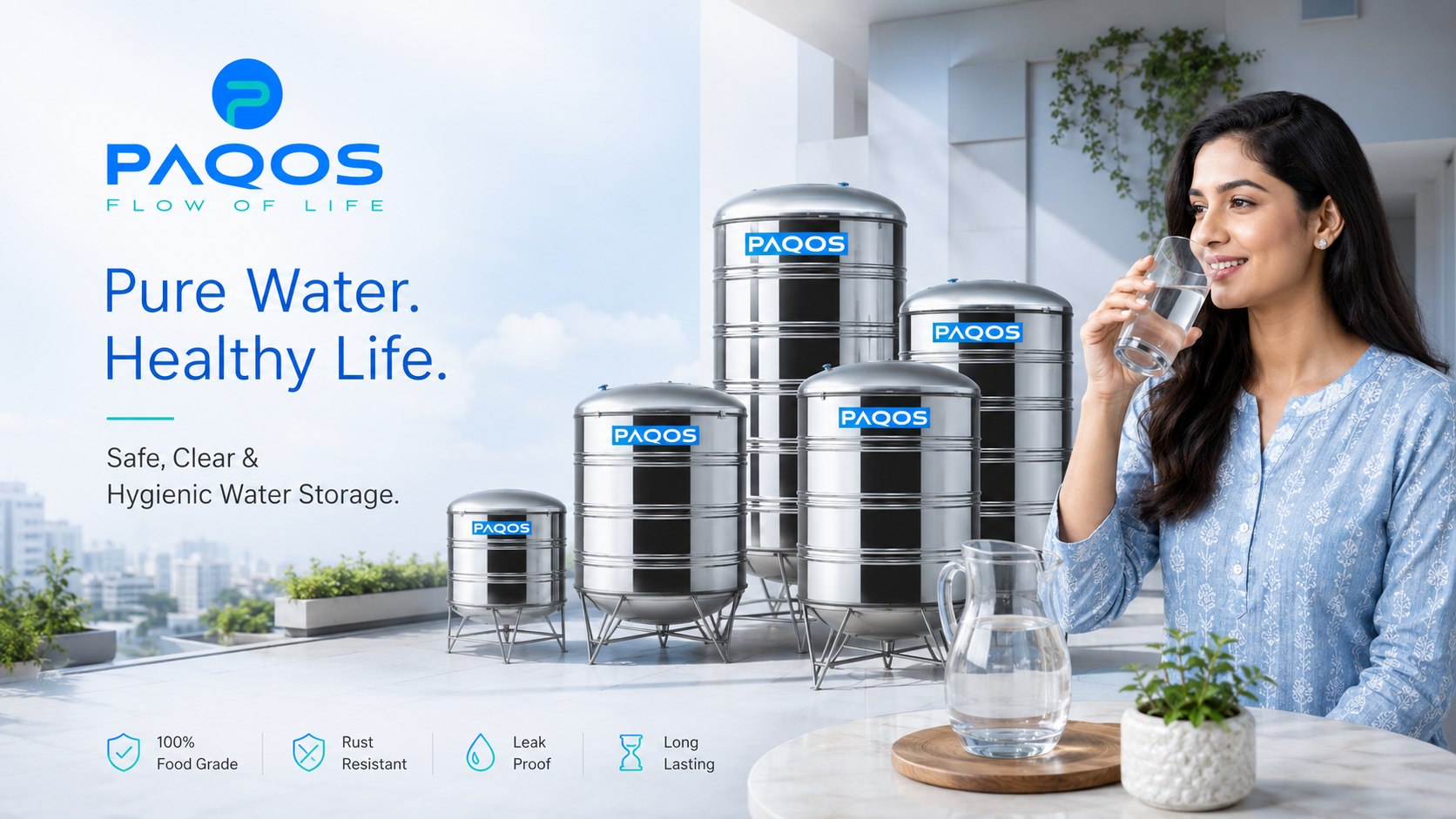
TL;DR: Underground stainless steel water tanks offer a hygienic, durable, and space-saving water storage solution for homes, apartments, hospitals, hotels, and industries across India. Built from food-grade stainless steel, these tanks protect water from heat, sunlight, and contamination—making them a smart long-term investment compared to plastic or RCC alternatives.
Clean water storage is not just a convenience in India—it is a necessity. Across cities, towns, and rural areas, millions of households and commercial buildings depend on stored water to meet daily needs. Yet many traditional water storage systems fall short. Plastic tanks degrade under UV exposure and leach chemicals. RCC tanks develop cracks over time and are difficult to clean. Overhead tanks lose water to heat and evaporation, while open or poorly sealed systems invite algae growth and bacterial contamination.
The result? Stored water that may look clean but carries hidden risks to health and hygiene.
This is why underground stainless steel water tanks are gaining serious attention across India. Installed below ground level, they shield water from direct sunlight, dust, and temperature fluctuations. Made from food-grade stainless steel, they do not rust, leach chemicals, or harbor biological growth. For anyone investing in long-term, safe water storage—whether for a home, apartment complex, hotel, hospital, school, or industrial facility—understanding this option is well worth the time.
This guide covers everything you need to know: what these tanks are, why they are becoming popular in India, how they compare to alternatives, how much they cost, how they are installed, and what to look for before buying one.
If you are also evaluating above-ground storage, our detailed post on stainless steel water tanks for drinking water explains the full range of benefits worth knowing.
What Is an Underground Stainless Steel Water Tank?
An underground stainless steel water tank is a water storage vessel fabricated from stainless steel and installed beneath the ground surface. Unlike overhead or surface-level tanks, it sits at a depth determined by the site’s capacity requirements and soil conditions.
The below-ground placement serves an important purpose: it keeps water naturally cool and away from direct sunlight, heat, airborne dust, and external contamination. This is especially valuable in India’s hot and humid climate, where above-ground storage can cause significant water temperature rise and accelerate bacterial growth.
These tanks are engineered for a wide range of applications:
- Drinking water storage for homes and housing societies
- Rainwater harvesting systems in urban and semi-urban areas
- Commercial water storage for hotels, restaurants, and office complexes
- Industrial applications including process water and cooling systems
- Fire-fighting water reserves in large buildings and campuses
- Hospitals and healthcare facilities where water hygiene is non-negotiable
The tanks are typically fabricated using welded stainless steel sheets—either SS304 or SS316 grade—and come fitted with inlet, outlet, overflow, drainage, and manhole access points.
Why Are Underground Stainless Steel Water Tanks Becoming Popular in India?
Several converging factors are driving demand for underground stainless steel water tanks across India.
Space constraints in urban areas are a significant driver. As cities expand vertically and horizontally, rooftop space becomes limited. Multi-storey apartments, commercial towers, and industrial complexes often cannot accommodate large overhead tanks. Installing storage underground utilizes land that would otherwise sit unused.
High water demand in apartment complexes and large institutions requires large-capacity storage—often 10,000 litres or more. Underground installation makes it practical to store substantial volumes without impacting building aesthetics or structural load.
Long-term hygiene concerns have prompted builders, architects, and health-conscious homeowners to move away from plastic tanks. Growing awareness about chemical leaching from low-quality plastics and the difficulty of cleaning RCC tanks has made stainless steel a preferred material.
Rainwater harvesting mandates are another contributing factor. Several Indian states now require or encourage rainwater harvesting in new constructions. Underground stainless steel tanks serve as ideal collection and storage units for harvested rainwater. For more on this topic, the Central Ground Water Board provides guidance on rainwater harvesting in India.
Key Benefits of Underground Stainless Steel Water Tanks
Hygienic Water Storage
Stainless steel is a non-porous, food-grade material. It does not react with water, does not support algae or bacterial growth, and does not impart any taste or odor. This makes it one of the safest materials available for drinking water storage.
Long Life and Durability
A well-fabricated stainless steel tank can last 25 to 40 years or more with proper care. This significantly outlasts plastic tanks, which typically require replacement within 10 to 15 years due to UV degradation and brittleness.
Corrosion Resistance
Unlike iron or mild steel tanks, stainless steel does not rust. The chromium content in the alloy forms a passive oxide layer that resists corrosion—even in humid underground environments.
Space-Saving Underground Design
Underground installation frees up rooftop and ground-level space for other uses. This is particularly valuable in dense urban settings where every square foot matters.
Protection from Sunlight and Heat
The below-ground position keeps water cool and away from UV radiation, which would otherwise degrade tank materials and encourage algae growth. Cool water storage also reduces microbial activity.
Low Maintenance
Compared to RCC tanks—which require regular de-silting, plastering repairs, and waterproofing—stainless steel tanks demand minimal maintenance. A periodic cleaning and inspection schedule is generally sufficient.
Better Long-Term Value
Higher upfront cost is offset by reduced maintenance expenses, longer lifespan, and consistent water quality. For institutions and large residential projects, this makes stainless steel a financially sound choice over 10 to 20 years.
For residential applications specifically, our guide on SS water tank for home covers sizing, placement, and installation considerations in detail.
Underground Stainless Steel Water Tank vs Plastic Tank vs RCC Tank
| Feature | Stainless Steel | Plastic (HDPE/PVC) | RCC (Concrete) |
|---|---|---|---|
| Hygiene | Excellent | Moderate | Low |
| Lifespan | 25–40+ years | 10–15 years | 20–30 years (with repairs) |
| Corrosion/Rust Risk | None | Moderate (UV) | High (seepage, cracking) |
| Leakage Risk | Very low | Moderate | High (cracks over time) |
| Maintenance | Low | Low | High |
| Water Quality | Excellent | Risk of chemical leach | Risk of contamination |
| Customization | High | Limited | High but time-consuming |
| Long-term Cost | High value | Lower upfront, higher long-term | High (ongoing repairs) |
The verdict is straightforward for buyers prioritizing water safety and long-term reliability: stainless steel outperforms both alternatives across the most critical parameters. Plastic tanks may suit low-budget applications, while RCC tanks work for very large capacities where stainless steel fabrication becomes cost-prohibitive. For most homes, apartments, and commercial buildings, stainless steel is the premium choice.
Best Uses of Underground Stainless Steel Water Tanks in India
Underground stainless steel tanks are versatile enough to serve virtually any sector:
- Residential homes: Safe drinking water storage with minimal maintenance
- Apartments and housing societies: Large-capacity shared water reserves
- Hotels and resorts: Uninterrupted supply for kitchens, laundry, and guest rooms
- Hospitals and clinics: Hygienic storage for potable water and medical use
- Schools and institutions: Safe drinking water for large populations
- Commercial buildings: Reliable supply for offices, malls, and business parks
- Industrial units: Process water, cooling, and utility water storage
- Rainwater harvesting systems: Collection and storage of harvested rainwater
- Fire-fighting water reserves: Dedicated emergency water supply compliant with building codes
For large-scale requirements, explore our range of commercial water storage solutions tailored for businesses and institutions.
Which Stainless Steel Grade Is Best for Underground Water Tanks?
Two grades dominate the market for water tank fabrication in India:
SS304 (the standard choice)
SS304 is an austenitic stainless steel containing 18% chromium and 8% nickel. It offers excellent corrosion resistance, is food-grade certified, and is widely used for drinking water tanks across India. For most residential, commercial, and institutional applications, SS304 delivers strong performance at a reasonable cost.
SS316 (for demanding conditions)
SS316 contains an additional 2–3% molybdenum, which significantly improves resistance to chloride corrosion. This makes it the better choice for:
- Coastal regions where saltwater air accelerates corrosion
- Areas with high mineral content or aggressive water chemistry
- Industrial applications where water may carry trace chemicals
Choosing the wrong grade can shorten tank lifespan and compromise water quality. Always confirm the grade before purchasing, and verify that your supplier meets relevant Indian drinking water quality standards as specified by the Bureau of Indian Standards (BIS).
Underground Stainless Steel Water Tank Price in India
Pricing for underground stainless steel water tanks in India is not fixed—and any supplier quoting a flat rate without assessing your requirements should be approached carefully.
The actual cost depends on several factors:
- Tank capacity: Larger tanks require more material and more complex installation
- Stainless steel grade: SS316 costs more than SS304
- Sheet thickness: Thicker sheets increase durability and cost
- Tank design: Custom shapes or multi-compartment designs add to fabrication costs
- Installation depth: Deeper excavation involves more labor and equipment
- Site conditions: Rocky terrain, high water table, or restricted access increases costs
- Plumbing and fittings: Inlet, outlet, overflow, and drainage connections vary by specification
- Customization: Manhole size, internal lining, insulation, and other options affect pricing
The right approach is to request a detailed quotation based on your specific capacity requirement, installation site, and intended use. For a more detailed breakdown of what influences pricing, our blog on stainless steel water tank price in India provides a useful reference point.
Installation Process of Underground Stainless Steel Water Tanks
A professional installation follows a structured sequence:
- Site inspection: Assessment of soil type, water table depth, load-bearing capacity, and access for excavation equipment
- Capacity planning: Determining the right tank size based on daily water consumption, source availability, and storage buffer requirements
- Excavation and base preparation: Digging to the required depth and laying a reinforced concrete base for load distribution and stability
- Tank placement: Lowering the fabricated tank into the pit using appropriate lifting equipment
- Inlet, outlet, overflow, and drainage connections: Plumbing work to integrate the tank with the building’s water supply system
- Manhole and ventilation setup: Installing access hatches for cleaning and inspection, along with properly screened ventilation points to prevent insect entry
- Testing and commissioning: Pressure and leak testing before final backfilling and handover
Installation quality directly affects long-term performance. Working with experienced professionals ensures that every step—from base preparation to plumbing—meets the required standards.
Maintenance Tips for Underground Stainless Steel Water Tanks
Stainless steel tanks require far less upkeep than concrete alternatives, but periodic maintenance is still important:
- Clean the tank every 6 to 12 months by draining, scrubbing internal surfaces, and flushing thoroughly
- Inspect inlet and outlet pipes for blockages, scale buildup, or corrosion at joints
- Check manhole covers to ensure they are sealed and secure, preventing surface runoff from entering
- Keep overflow and drainage lines clear to avoid backflow or waterlogging around the tank
- Avoid storing chemicals near the tank or using chemical cleaning agents that could contaminate the water
- Test water quality periodically, especially if the tank serves a hospital, school, or food processing facility
- Schedule a professional inspection every 2 to 3 years to check welding integrity and fitting conditions
Following WHO drinking water safety guidelines for stored water quality is recommended for all facilities serving the public.
Things to Check Before Buying an Underground Stainless Steel Water Tank
Before placing an order, verify the following:
- Tank capacity: Sized correctly for your daily requirement and storage buffer
- Stainless steel grade: SS304 for standard use; SS316 for coastal or industrial conditions
- Sheet thickness: Thicker gauge for larger tanks or deeper installations
- Welding quality: TIG or MIG welding with food-grade certification is preferred
- Installation support: Supplier provides or coordinates professional installation
- Warranty: Minimum 10-year structural warranty is a reasonable expectation
- Customization options: Ability to adjust dimensions, fittings, and access points
- After-sales service: Responsive support for maintenance, repairs, and spare parts
- Drinking water suitability: Confirmed food-grade certification for the material and fabrication process
Why Choose PAQOS for Underground Stainless Steel Water Tanks in India?
PAQOS is a trusted provider of premium stainless steel water storage solutions for homes, commercial buildings, hospitals, industries, and institutions across India.
What sets PAQOS apart is a commitment to both product quality and service reliability. Every tank is fabricated from food-grade stainless steel with precision welding, designed to deliver safe, clean water storage for decades. Custom tank sizes are available to match your specific capacity and site requirements—whether you need a compact residential unit or a large-volume industrial installation.
PAQOS also provides professional installation support, ensuring that excavation, placement, plumbing, and commissioning are handled correctly from the start. The result is a water storage system that performs consistently, requires minimal maintenance, and protects the health of everyone who depends on it.
Ready to get started? Get a quote for your underground stainless steel water tank and speak with a PAQOS specialist about capacity planning, installation, and pricing tailored to your project.
The Smart Choice for Safe, Long-Term Water Storage in India
Underground stainless steel water tanks represent a meaningful upgrade in how Indian homes, apartments, and institutions store water. The combination of hygiene, durability, corrosion resistance, and space efficiency makes them a compelling long-term investment—particularly as awareness of water quality and sustainable storage grows across the country.
Plastic tanks degrade. Concrete tanks crack. Stainless steel endures.
For anyone building a new home, upgrading an existing storage system, or planning a large commercial or industrial facility, an underground stainless steel tank deserves serious consideration. The upfront investment is higher, but the long-term return—in water quality, reduced maintenance, and peace of mind—is well worth it.
Contact PAQOS today for expert guidance on tank sizing, pricing, and professional installation support across India.
Frequently Asked Questions
Is an underground stainless steel water tank safe for drinking water?
Yes. Underground stainless steel tanks fabricated from food-grade SS304 or SS316 are safe for drinking water storage. Stainless steel is non-reactive, non-porous, and does not leach chemicals into water. The below-ground placement also protects water from UV exposure and external contamination, further supporting water quality.
What is the price of an underground stainless steel water tank in India?
There is no fixed price. The cost depends on tank capacity, stainless steel grade (SS304 or SS316), sheet thickness, site conditions, installation depth, plumbing requirements, and any customization. Requesting a detailed quotation based on your specific requirements is the most reliable way to get accurate pricing.
Which is better: a plastic tank or a stainless steel tank?
Stainless steel is superior in terms of hygiene, lifespan, and water quality. Plastic tanks are cheaper upfront but degrade under UV exposure, may leach chemicals over time, and typically last 10 to 15 years. Stainless steel tanks can last 25 to 40 years or more with minimal maintenance, making them better value over the long term.
Which stainless steel grade is best for water tanks?
SS304 is the most widely used grade for drinking water tanks in India and suits most residential, commercial, and institutional applications. SS316 offers higher corrosion resistance and is recommended for coastal regions or areas with aggressive water chemistry. Confirm the grade with your supplier before purchasing.
Can underground stainless steel tanks be used for rainwater harvesting?
Yes. Underground stainless steel tanks are well-suited for rainwater harvesting. Their below-ground placement naturally keeps harvested water cool and protected from contamination, while the stainless steel material ensures that stored water remains clean and suitable for use. Many Indian states encourage rainwater harvesting systems in new constructions.
How long does a stainless steel water tank last?
A well-fabricated and properly installed underground stainless steel water tank typically lasts 25 to 40 years or more. Lifespan depends on material grade, installation quality, water chemistry, and maintenance. This significantly exceeds the lifespan of plastic or standard RCC tanks.
Is maintenance required for underground stainless steel water tanks?
Yes, but it is minimal compared to RCC alternatives. Basic maintenance includes periodic cleaning (every 6 to 12 months), inspection of inlet and outlet fittings, checking manhole covers for proper sealing, and keeping overflow and drainage lines clear. A professional inspection every 2 to 3 years is recommended for tanks serving hospitals, schools, or commercial facilities.