

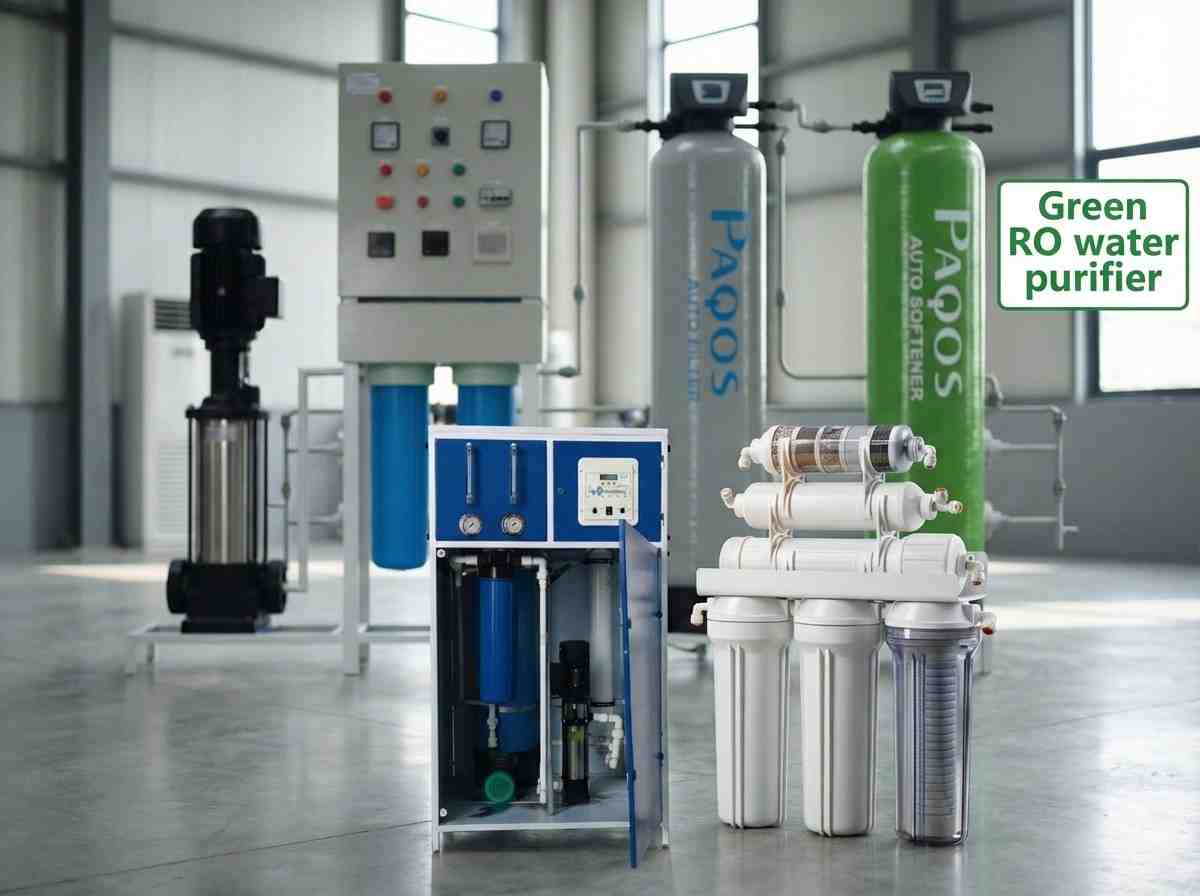
Water is essential for life, but access to clean, safe drinking water is becoming a global challenge. In many regions, groundwater is heavily contaminated with dissolved salts, heavy metals, and chemicals, making Reverse Osmosis (RO) purifiers a necessity rather than a luxury. However, there is a hidden cost to this purity: water wastage.
Traditional RO systems are notorious for their inefficiency. For every liter of purified water you drink, a standard RO machine flushes down approximately three to four liters of “reject water.” In a country grappling with water scarcity, this level of waste is alarming. If a family of four consumes 20 liters of water a day, they might be wasting over 60 liters daily—that’s nearly 22,000 liters of water poured down the drain every year by just one household.
This is where the Green RO water purifier steps in as a game-changer. It represents the next generation of water purification technology, designed to address the dual challenge of providing safe drinking water while conserving our most precious natural resource.
In this guide, we will explore how Green RO technology works, why it is the superior choice for your home, and how it compares to traditional systems.
What is a Green RO Water Purifier?
A Green RO water purifier is an advanced water filtration system designed to minimize water wastage while maximizing purification efficiency. Unlike conventional RO systems that discard a significant portion of the input water, Green RO technology utilizes superior membrane technology and innovative recovery mechanisms to retain more water.
How is it different from a standard RO?
The primary difference lies in the recovery rate. A standard RO system typically has a recovery rate of 20% to 25%, meaning 75% to 80% of the water is wasted. In contrast, a Green RO water purifier can achieve recovery rates of 50% to 70% or higher, depending on the input water quality.
This technology doesn’t just block contaminants; it manages water flow intelligently. By recirculating water through the membranes or using multi-stage filtration that puts less stress on the primary RO membrane, these systems ensure that the “reject water” is kept to an absolute minimum without compromising the quality of the drinking water.
An Environment-Friendly Approach
The term “Green” isn’t just a marketing label; it refers to the holistic environmental impact. By saving thousands of liters of water annually, these purifiers reduce the strain on municipal water supplies and groundwater reserves. Furthermore, many green systems are designed to be energy-efficient, consuming less electricity to purify the same amount of water compared to older models.
Green RO Water Purifier for Home: A Necessity, Not a Choice
For Indian households, the water quality varies drastically from region to region. High Total Dissolved Solids (TDS) levels in borewell water often make RO purification mandatory. However, the guilt of wasting water often weighs heavily on environmentally conscious homeowners. Installing a Green RO water purifier for home use resolves this ethical dilemma.
Best Suited for Indian Homes
Indian homes often rely on limited water supplies—whether it’s municipal corporation water that comes at fixed hours or groundwater that is depleting rapidly. A system that wastes three buckets of water to fill one bottle is unsustainable in this context. A Green RO water purifier for home installations ensures that you are extracting the maximum utility from your water supply.
Health and Sustainability Combined
There is a misconception that high water recovery leads to lower water quality. This is false. High-quality Green RO systems maintain the perfect balance of essential minerals. While removing harmful heavy metals like lead and arsenic, they ensure the water doesn’t become acidic or “dead,” which can happen with excessive purification in older systems. You get the health benefits of pure, mineral-rich water alongside the satisfaction of living sustainably.
Solving Daily Water Usage Issues
Consider the daily routine of a standard kitchen. You fill bottles, use RO water for cooking, and maybe even for washing vegetables. If your purifier is efficient, you aren’t constantly waiting for the tank to fill up, and you aren’t listening to the sound of water draining away for hours. A Green RO system operates efficiently, providing a steady supply of clean water without the excessive runoff associated with traditional models.
The Rise of the Eco Friendly RO Water Purifier
Sustainability goes beyond just saving water. An eco friendly RO water purifier impacts your environmental footprint in several ways, from plastic reduction to energy conservation.
Reducing Plastic Waste
The most direct alternative to home purification is buying bottled water. The bottled water industry is a massive contributor to plastic pollution. By installing a reliable eco friendly RO water purifier at home, you eliminate the need for single-use plastic bottles. You get the same, if not better, quality of water straight from your tap, keeping thousands of plastic bottles out of landfills and oceans.
Energy and Water Conservation
Standard RO pumps work hard to push water through membranes, often running for long periods due to low recovery rates. Because an eco friendly RO water purifier recovers water faster and more efficiently, the pump runs for shorter durations. This leads to lower electricity consumption over time. When you combine water savings with energy savings, the Green RO becomes a cornerstone of an eco-conscious lifestyle. Green RO water purifier
Importance for Sustainable Living
Adopting a sustainable lifestyle involves making small changes that add up to a significant impact. Switching to green appliances is one of the most effective steps a household can take. Water is a finite resource. By choosing technology that respects this resource, you are contributing to a larger movement of conservation that ensures future generations have access to clean water. Green RO water purifier
The Mechanics of a Water Saving RO Purifier
How exactly does a water saving RO purifier achieve such high efficiency? It comes down to the engineering of the filtration process and the quality of the components used. Green RO water purifier
Traditional RO vs. Green RO Water Usage
Let’s look at the math. To get 10 liters of pure water:
- Traditional RO: Consumes approx. 40 liters (10L Pure + 30L Waste).
- Green RO: Consumes approx. 15-20 liters (10L Pure + 5-10L Waste).
This drastic reduction in input requirements means your overhead tank lasts longer, and your reliance on water tankers or municipal supply drops. Green RO water purifier
The Concept of Water Recovery Rate
The recovery rate is determined by the membrane’s ability to separate pure water from high-TDS water. A water saving RO purifier uses high-performance membranes that can withstand higher osmotic pressure. Some systems also employ a “permeate pump” or similar technology that uses the energy of the reject water to power the system, further increasing efficiency.
Long-Term Water Savings
Over the lifespan of a purifier (typically 5-10 years), the savings are astronomical. A single water saving RO purifier can save over 100,000 liters of water in its lifetime compared to a standard unit. That is enough water to fill a large residential swimming pool.
Zero Water Wastage RO System: Myth or Reality?
You may have seen advertisements for a zero water wastage RO system. Is it actually possible to have zero waste?
Defining Zero and Minimal Wastage
Technically, the laws of physics dictate that impurities must go somewhere. You cannot have 100% pure water extraction from high-TDS water without leaving behind a concentrated brine. However, a zero water wastage RO system achieves “zero waste” by re-routing the reject water. Green RO water purifier
Instead of dumping the reject water down the drain, these systems recirculate it into an overhead tank (if the TDS isn’t too high) or push it to a separate outlet specifically designed for washing utensils, mopping floors, or watering plants. The result is that no water leaves your home’s ecosystem as “waste.”
The Role of Green RO Technology
Green RO technology facilitates this by ensuring the reject water is not overly concentrated with harmful chemicals, making it safe for non-potable uses. Advanced sensors and valves manage the flow, ensuring that the user experience is seamless. You don’t have to manually collect water in buckets; the system integrates with your home’s plumbing to ensure every drop is utilized.
Future-Ready Purification
As water regulations tighten and governments potentially mandate water-saving devices, owning a zero water wastage RO system future-proofs your home. It aligns your household with the highest standards of environmental responsibility.
Green RO vs Normal RO Purifier: A Detailed Comparison
When you are in the market for a new purifier, understanding the differences between a Green RO vs normal RO purifier is crucial for making an informed decision.
| Feature | Normal RO Purifier | Green RO Water Purifier |
|---|---|---|
| Water Recovery | Low (20-25%) | High (50-70%+) |
| Wastage | High (Approx. 3L waste per 1L pure) | Low (Approx. 1L or less waste per 1L pure) |
| Technology | Standard Membrane | High-Efficiency Membrane & Recirculation |
| Energy Usage | Moderate to High | Low (Due to faster filtration) |
| Environmental Impact | Negative (High water footprint) | Positive (Conserves resources) |
| Cost Efficiency | Lower upfront cost, higher operational cost | Higher value, saves on water/electricity bills |
Environmental Impact
The starkest contrast in the Green RO vs normal RO purifier debate is the environmental footprint. Normal ROs contribute to the water crisis, while Green ROs help mitigate it. For any consumer conscious of their ecological impact, the choice is clear. Green RO water purifier.
Maintenance and Efficiency
Critics often argue that Green ROs are harder to maintain. In reality, because the technology is more advanced, these systems often come with smart indicators and auto-flush mechanisms that prolong membrane life. While a normal RO might clog faster due to inefficient processing, a Green RO water purifier operates with optimized pressure and flow, often resulting in fewer service calls.
Why Choose Green RO by Paqos?
When it comes to water solutions, not all brands are created equal. Paqos has established itself as a pioneer in the industry, revolutionizing how we treat water since 1997.
A Legacy of Trust
With over 30 years in the business and more than 85,000 retail customers, Paqos understands the nuances of water quality better than anyone. They aren’t just assembling parts; they are engineering solutions. Their commitment to excellence has made them a trusted name in alkaline water, pressure boosters, and specifically, Green RO technology.
Quality and Innovation
Paqos is at the forefront of the Green RO water purifier revolution. Their products are designed with the specific needs of Indian consumers in mind. They combine durability—using materials like stainless steel tanks—with smart, app-enabled services that allow you to track your water usage and service needs effortlessly.
Choosing Paqos means choosing a brand that prioritizes sustainability. Their Green RO solutions are built to minimize waste without compromising on the purity or taste of the water.
Suitable for Residential and Commercial Needs
Whether you need a Green RO water purifier for home or a robust system for a commercial establishment, Paqos offers tailored solutions. Their strategic approach ensures that whether you are a single household or an industry giant, you get a water solution that meets the highest standards of excellence.
To learn more about their range of eco-friendly water solutions, visit Paqos.
Frequently Asked Questions (FAQs)
Is Green RO safe for drinking?
Yes, absolutely. A Green RO water purifier removes harmful contaminants, bacteria, and viruses just like a standard RO, but it does so more efficiently. Many Green RO systems also include mineralizers to add essential minerals back into the water, making it healthier than water from standard systems that strip everything away.
Does Green RO really save water?
Yes. While a traditional RO wastes about 75% of the input water, a Green RO water purifier can recover up to 50-70% of the water. Over a year, this saves thousands of liters of water for an average household.
Green RO ka maintenance kaisa hota hai? (How is the maintenance of Green RO?)
Maintenance for a Green RO water purifier is very similar to standard purifiers. In fact, because of better technology and auto-flush features, the membranes often last longer. Regular filter changes are required, but the overall durability is high, especially with trusted brands like Paqos.
Kya Green RO Indian water conditions ke liye suitable hai? (Is Green RO suitable for Indian water conditions?)
Yes, Green RO water purifiers are specifically designed to handle the high TDS (Total Dissolved Solids) levels often found in Indian groundwater. They effectively treat hard water while ensuring minimal wastage, making them the perfect solution for Indian homes.
Embrace a Sustainable Future with Smart Water Solutions
The days of ignoring water wastage are over. As we face global climate challenges, every drop counts. Switching to a Green RO water purifier is one of the most impactful decisions you can make for your home and the planet. It offers the perfect blend of health, safety, and environmental responsibility.
By choosing a Green RO water purifier for home, you are not just buying an appliance; you are investing in a sustainable future. You are choosing to protect your family from waterborne diseases while protecting the earth from resource depletion.
With pioneers like Paqos leading the charge with innovative, smart, and eco-friendly solutions, upgrading your water system has never been easier. Don’t let your old purifier drain your wallet and the planet’s resources. Make the switch today and experience the excellence of Green RO technology.
For more insights on global water conservation efforts, you can explore resources from the World Health Organization (WHO).