

You lock your doors at night for safety. You install water purifiers for health. But what are you doing about the invisible threat that surrounds you every time you take a breath inside your own home?
Most of us spend nearly 90% of our time indoors, yet we often pay little attention to the quality of the air we breathe in our living rooms, offices, and bedrooms. We assume that being inside protects us from outdoor pollution. The reality, however, is often the opposite. Without proper airflow, indoor spaces become traps for pollutants, carbon dioxide, and allergens.
This is where a fresh air ventilation system transforms your environment. It isn’t just about blowing air around; it’s about exchanging stale, contaminated indoor air with filtered, oxygen-rich outdoor air.
In this comprehensive guide, we will explore how these systems work, why they are superior to standard air purifiers, and how solutions like those from Paqos can revolutionize your health and comfort.
What Is a Fresh Air Ventilation System?
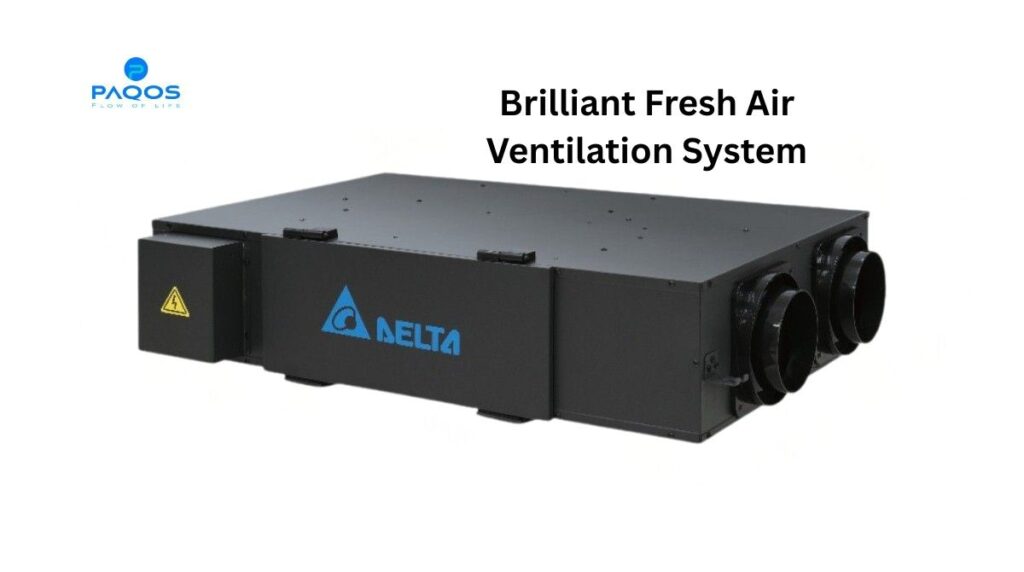
A fresh air ventilation system is a mechanical setup designed to supply clean, filtered outdoor air into a building while simultaneously exhausting stale indoor air. Unlike opening a window—which lets in noise, dust, and unregulated temperatures—a dedicated system manages this exchange with precision.
How It Works
Think of your home as a set of lungs. It needs to inhale good air and exhale bad air to function correctly.
- Intake: The system draws air from the outside.
- Filtration: Before this air enters your living space, it passes through advanced filters that remove dust, pollen, and harmful particulate matter (PM2.5).
- Exchange: In energy-efficient models, heat or energy is transferred from the outgoing air to the incoming air (more on this later).
- Distribution: The clean air is distributed evenly throughout the rooms.
- Exhaust: Simultaneously, the system pulls stale air containing CO₂, odors, and humidity from inside and pushes it outdoors.
This continuous cycle ensures that you are never breathing recycled, stagnant air. Whether applied in residential homes or large commercial spaces, mechanical ventilation for homes and offices guarantees a constant supply of oxygen. Fresh air ventilation system.
Why Indoor Air Quality Matters
We often associate pollution with smoggy city streets, but indoor air quality improvement is arguably more critical for long-term health. Why? Because modern buildings are built to be airtight for energy efficiency. While this keeps air conditioning costs down, it traps pollutants inside.
The CO₂ Problem
Have you ever felt groggy, tired, or developed a headache after sitting in a closed conference room or bedroom for too long? That is often the result of a CO₂ level control system failure—or a lack thereof. As we breathe, we exhale carbon dioxide. In a sealed room, CO₂ levels spike rapidly. High CO₂ levels lead to:
- Reduced cognitive function and focus.
- Fatigue and drowsiness.
- Headaches and nausea.
The Hidden Pollutants
Beyond CO₂, our homes are filled with invisible contaminants:
- VOCs (Volatile Organic Compounds): Emitted by paints, furniture, and cleaning supplies.
- Biological Contaminants: Mold spores, bacteria, and viruses that thrive in stagnant air.
- Excess Humidity: Which can lead to dampness and structural damage.
A fresh air ventilation system actively dilutes these concentrations, flushing them out before they can impact your health.
Fresh Air Ventilation vs. Air Purifiers
One of the most common questions homeowners ask is: “I have an air purifier; why do I need a ventilation system?”
While both technologies aim to improve air quality, they perform fundamentally different functions.
Air Purifiers: The Scrubbers
An air purifier recirculates the same air within a room. It passes that air through filters to trap dust and particles. While effective at removing solid particulates, air purifiers cannot remove carbon dioxide or replenish oxygen. If you run a purifier in a closed room, the air might be dust-free, but it will still become stale and oxygen-depleted over time. Fresh air ventilation system.
Ventilation Systems: The Exchangers
A fresh air ventilation system replaces the air entirely. It pushes out the CO₂ and VOC-laden air and brings in fresh oxygen.
The Verdict: For complete indoor air quality improvement, ventilation is essential. An air purifier is a supplementary tool, but it cannot replace the need for fresh oxygen.
Benefits of a Fresh Air Ventilation System
Installing a whole house ventilation system offers transformative benefits for your property and your well-being.
1. Improved Health and Immunity
By constantly flushing out airborne pathogens, bacteria, and allergens, these systems reduce the transmission of illnesses. Fresh, oxygenated air also supports better sleep and respiratory health.
2. Enhanced Comfort and Odor Control
Cooking smells, pet odors, and bathroom humidity don’t linger. The system ensures your home always smells fresh without the need for artificial air fresheners.
3. Mold and Moisture Prevention
Excess moisture is the enemy of any building. It leads to mold growth, which triggers allergies and asthma. Ventilation systems regulate humidity levels, protecting both your health and your home’s structure. Fresh air ventilation system.
4. Cognitive Performance
For offices and schools, fresh air is a productivity booster. Lower CO₂ levels mean sharper focus, better decision-making, and less afternoon fatigue.
5. Energy Efficiency
Modern systems, particularly those using Energy Recovery Ventilation (ERV), prevent energy waste. They recover the cooling or heating energy from the outgoing air and use it to treat the incoming air, ensuring your AC doesn’t have to work overtime.
Types of Fresh Air Ventilation Systems
Not all ventilation solutions are created equal. Choosing the right one depends on your climate, building type, and specific needs.
ERV (Energy Recovery Ventilation)
This is the gold standard for most climates, especially in regions with high humidity or extreme temperatures. An Energy Recovery Ventilation (ERV) system transfers both heat and moisture.
- Summer: It pre-cools and dehumidifies incoming hot air using the cool, dry air leaving the building.
- Winter: It warms and humidifies incoming cold air using the warm, moist air leaving the building.
This reduces the load on your air conditioner or heater, saving significant energy costs.
HRV (Heat Recovery Ventilation)
Similar to ERV, an HRV transfers heat but not moisture. These are best suited for environments where humidity control is not a primary concern or in strictly dry climates. Fresh air ventilation system.
Mechanical Ventilation
This is a broader category that includes simple supply-only or exhaust-only fans. While better than nothing, basic mechanical ventilation for homes without energy recovery can lead to higher utility bills because it sucks out conditioned air (paid for by your AC) and pulls in unconditioned outdoor air.
Where Fresh Air Ventilation Is Needed
The application of a fresh air ventilation system extends far beyond luxury homes. It is a necessity in various settings.
Homes
From apartments in bustling cities to villas in the suburbs, residential spaces need ventilation to combat cooking fumes, chemical off-gassing, and metabolic CO₂. A whole house ventilation system ensures every room remains fresh. Fresh air ventilation system.
Offices
High-density occupancy in meeting rooms and open-plan offices leads to rapid oxygen depletion. Proper ventilation is directly linked to higher employee productivity and fewer sick days.
Schools and Hospitals
Children and patients are vulnerable to airborne pollutants. Schools with proper CO₂ level control systems report better student concentration, while hospitals rely on ventilation to prevent cross-contamination of airborne diseases. Fresh air ventilation system.
Why Choose Paqos Fresh Air Solutions?
When it comes to selecting a system that balances performance, energy efficiency, and filtration, Paqos stands out as a trusted industry leader.
Paqos understands that generic solutions don’t work everywhere. Specifically designed to handle challenging environments, Paqos systems address the unique needs of regions with high pollution levels and varying humidity.
Advanced Filtration
Paqos systems don’t just move air; they purify it. Equipped with medical-grade filtration, they block PM2.5, dust, and traffic exhaust from entering your space, ensuring the “fresh” air you get is actually clean.
Smart Monitoring
Modern problems require modern solutions. Paqos integrates smart technology that monitors indoor air quality in real-time. The system adjusts its operation based on CO₂ and pollutant levels, ensuring optimal performance without manual intervention.
Custom Solutions for Indian Conditions
India presents unique challenges: high outdoor pollution (AQI), dust, and humidity. A European standard system might clog quickly or fail to handle the humidity load. Paqos designs its fresh air ventilation system technology specifically to withstand these rigorous conditions, offering durability and reliability where others fail.
Maintenance and Long-Term Performance
Investing in a fresh air ventilation system is a commitment to long-term health, and like any machine, it requires care to function at its peak.
Filter Replacement
The filters are your first line of defense. Depending on the outdoor air quality (AQI) in your city, filters should be checked every 3 months and replaced every 6 to 12 months. A clogged filter restricts airflow and forces the fans to work harder, reducing energy efficiency.
System Care Tips
- Clean the intake hoods: Ensure leaves or debris aren’t blocking the outdoor vents.
- Check the core: For ERV/HRV systems, the heat exchange core should be vacuumed or washed (depending on the model) once a year.
- Professional Service: Have a technician from Paqos inspect the ductwork and fans annually to ensure everything is calibrated correctly.
FAQs
Is fresh air ventilation better than an air purifier?
Yes, for oxygenation and CO₂ removal. An air purifier only cleans existing air; it cannot supply oxygen. A fresh air ventilation system provides oxygen-rich air while also filtering out pollutants, offering a more complete solution.
Does it increase electricity bills?
Standard ventilation might, but systems with Energy Recovery Ventilation (ERV) are designed to be energy neutral or even energy saving. By pre-cooling or pre-heating incoming air, they reduce the workload on your air conditioning system, often offsetting their own running costs.
Is it suitable for Indian cities with high AQI?
Absolutely. In fact, it is necessary. Opening windows in cities with high AQI introduces dangerous pollution into your home. A Paqos system allows you to keep windows closed while still getting fresh air, as the incoming air is rigorously filtered before it enters your room.
Can I retrofit this into an existing house?
Yes. While it is easiest to install during construction, there are decentralized (wall-mounted) units and retrofit ducted solutions available that can be installed in existing homes with minimal disruption.
Breathe Better, Live Better
The air we breathe fuels every cell in our body. Relying on recycled, stale indoor air is a compromise on your health, sleep quality, and cognitive function. A fresh air ventilation system is no longer a luxury; in today’s environment, it is a necessity for a healthy home.
By moving beyond simple air purification and embracing comprehensive air exchange, you ensure that your indoor environment is a true sanctuary. Whether you are looking for a whole house ventilation system or a commercial solution, prioritizing airflow is prioritizing life.
Ready to transform the way you breathe? Explore the advanced range of solutions from Paqos and take the first step toward a fresher, healthier future.