

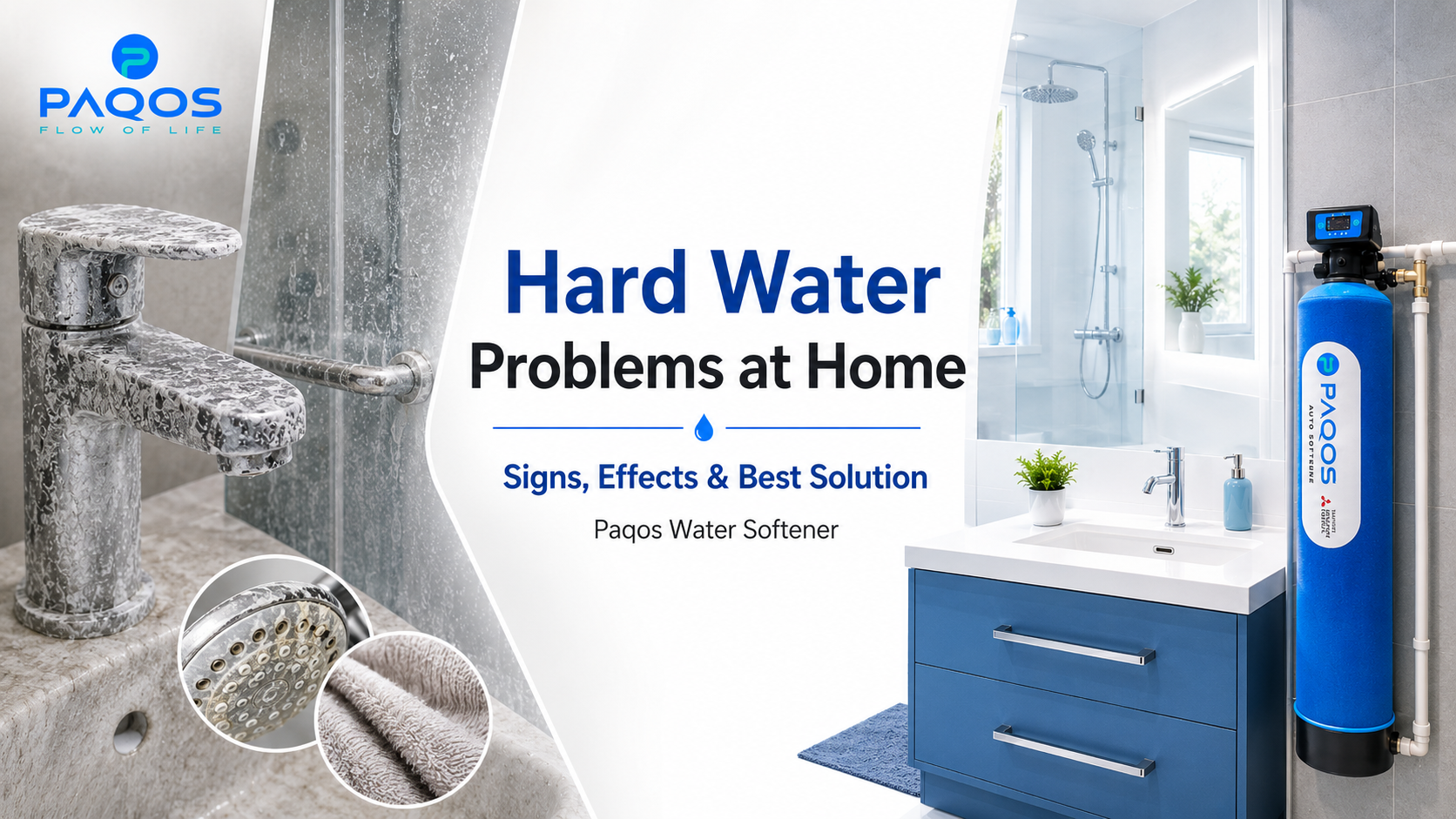
Hard water problems at home are caused by excess calcium and magnesium in your water supply. Common signs include white stains on taps, scale buildup in appliances, dry skin, and dull clothes. A whole-house water softener is the most effective long-term solution for managing hardness at its source.
Hard water problems at home can affect everything from bathroom fixtures and clothes to your skin, hair, and household appliances. White marks reappearing on taps within days of cleaning. Cloudy bathroom glass that never quite looks clean. Hair that feels rough no matter what shampoo you use. Clothes losing their brightness after just a few washes.
Most homeowners treat these as separate issues—cleaning problems, maintenance tasks, or product failures. The real cause, in many cases, is the water itself. This article explains the signs and effects of hard water, why surface-level cleaning only goes so far, and how a properly selected water softener can protect your home over the long term.
What Is Hard Water?
Water picks up minerals as it moves through rocks and soil. When it absorbs relatively high amounts of calcium and magnesium, it becomes what is commonly referred to as hard water. Groundwater and borewell sources tend to have higher mineral concentrations because water spends more time in contact with mineral-rich ground layers.
The difference between hard water and soft water comes down to mineral content. Soft water contains low levels of dissolved calcium and magnesium, while hard water carries a higher concentration of these minerals. According to the U.S. Geological Survey, what causes water hardness is primarily the presence of calcium and magnesium ions absorbed during the natural water cycle. Water hardness is generally considered a household maintenance and water-quality concern rather than a direct health issue.
Seven Common Signs of Hard Water Problems at Home
Recognizing the signs of hard water is the first step toward addressing the problem at its source.
White Stains on Taps and Fixtures
Chalky white marks on taps, showerheads, sinks, tiles, and faucets are one of the most recognizable signs of hard water. These deposits form when water evaporates and leaves dissolved minerals behind. Regular cleaning may remove the visible marks temporarily, but the stains return if the water itself remains untreated.
Cloudy or Stained Bathroom Glass
Shower partitions, mirrors, and glass surfaces develop a dull, spotted appearance from repeated water contact. The resulting marks are difficult to remove and gradually strip away the clean, premium look of a bathroom—no matter how often you scrub.
Scale Buildup Around Showerheads
Mineral scale accumulates on fixtures and blocks water openings over time. Inside hot-water pipes and heating equipment, the same buildup restricts water flow and reduces overall efficiency. This is one of the more damaging effects of hard water that often goes unnoticed until flow or performance drops noticeably.
Rough, Dry, or Unmanageable Hair
Mineral residue left on hair after washing can make it feel rough, heavy, or difficult to manage. Hard water is not a medical diagnosis for hair loss or damage, but it is a recognized contributor to poor washing results—particularly for those who already struggle with dry or brittle hair.
Dry or Uncomfortable Skin After Bathing
The U.S. Geological Survey explains that calcium and magnesium in hard water can react with soap and produce soap scum—a sticky residue that doesn’t rinse away cleanly. This residue can leave skin feeling dry or tight after bathing, even when using high-quality soap or body wash.
Dull or Stiff Clothes
Laundry washed in hard water tends to lose brightness faster. Towels feel stiff rather than soft. White garments take on a dull, grey tinge. Detergent doesn’t lather as effectively, which means you often end up using more of it—at greater cost and without better results.
Reduced Performance of Household Appliances
Scale buildup inside geysers, washing machines, dishwashers, coffee machines, and water heaters reduces their efficiency and shortens their working life. Heating elements coated in scale use more energy to reach the same temperature and are more likely to fail prematurely.
Effects of Hard Water on Your Home and Lifestyle
The effects of hard water extend beyond aesthetics. Left untreated, hard water problems at home create recurring costs and frustrations across multiple areas.
Cleaning and Maintenance: More frequent bathroom cleaning, recurring tap and glass stains, and higher cleaning-product consumption become part of the weekly routine.
Plumbing and Fixtures: Scale inside pipes blocks shower openings, reduces fixture performance, and causes uneven or low water pressure over time.
Household Expenses: Detergent and soap usage increases. Appliance servicing costs rise. Heating elements need earlier replacement. Maintenance requirements across the home multiply.
Daily Comfort: Bathing feels less refreshing, laundry feels rough, bathrooms are harder to keep looking clean, and more time is spent removing stains that keep coming back.
Scale deposits can restrict water flow and reduce the efficiency of water-heating equipment—making hard water a genuine contributor to higher household running costs.
Temporary Cleaning Methods vs a Long-Term Solution
Vinegar, descaling sprays, and bathroom cleaners are useful tools. They remove visible scale from affected surfaces and can restore the appearance of taps and glass temporarily. However, they treat only what is already there—not what is still coming through the pipes.
| Temporary Approach | Long-Term Approach |
|---|---|
| Removes visible stains | Treats hardness in the water |
| Requires repeated cleaning | Reduces recurring scale formation |
| Works on individual fixtures | Can protect multiple water outlets |
| Does not treat the source | Addresses the underlying problem |
Repeatedly cleaning mineral deposits is a fundamentally different action from treating hard water before it reaches taps, bathrooms, and appliances. Surface cleaning manages the symptom. A water softener addresses the cause.
How a Water Softener Helps Solve Hard Water Problems
A water softener is installed within a home’s water system, typically near the main water line or overhead tank outlet. Its purpose is to reduce the calcium and magnesium responsible for hardness before water reaches household outlets.
Most conventional softeners use an ion-exchange process: hardness-producing calcium and magnesium ions are replaced with sodium or potassium ions, producing water that is significantly softer. The treated water is then supplied to selected outlets—or throughout the entire house—depending on the installation design.
According to the U.S. Environmental Protection Agency guidance on selecting an efficient water softener, homeowners should look for systems that prioritize both water and salt efficiency. It is also important to note that water softening and drinking-water purification serve different purposes. A softener reduces hardness; it does not remove all contaminants or replace a dedicated water purifier.
Why Choose a Paqos Water Softener Filter?
Paqos approaches hard water differently from off-the-shelf softener products. Rather than recommending a standard system, Paqos begins with a water-quality assessment to identify actual conditions before any solution is selected.
Based on the home’s water source, hardness level, family size, and daily usage patterns, the Paqos team recommends a suitable water softener filter for the home with appropriate system sizing and installation planning. The result is protection that covers bathrooms, fixtures, and selected appliances—backed by professional consultation and ongoing support.
For homeowners looking at whole-home water management, Paqos provides a structured approach rather than a generic product recommendation.
How to Select the Right Water Softener for Your Home
Choosing the right water softener for home use requires testing before purchasing. Key factors to evaluate include:
- Water hardness level (confirmed through testing, not estimated)
- Source of water—municipal supply, borewell, or overhead tank
- Number of family members and bathrooms
- Daily water consumption
- Available installation space
- Regeneration frequency and salt efficiency
- Maintenance requirements and after-sales support
The EPA recommends choosing a water softener that prioritizes both water and salt efficiency and maintaining it correctly over time. Water quality testing should always come before product selection—hardness levels vary significantly between locations, and the right system for one home may be undersized or oversized for another.
Frequently Asked Questions About Hard Water Problems at Home
Is hard water unsafe to drink?
Water hardness itself is generally associated with dissolved calcium and magnesium and is considered an aesthetic and household-use concern rather than a direct health risk. According to the World Health Organization’s guidance on hardness in drinking water, hard water is not linked to adverse health effects in most people. However, hardness testing does not confirm that water is free from other contaminants. A separate water quality test is recommended if drinking water safety is a concern.
Can an RO purifier solve whole-house hard water problems?
An RO (reverse osmosis) system is generally designed for specific drinking-water applications at a single point of use. A whole-house water softener serves a different purpose—treating hardness before water reaches multiple outlets, including bathrooms, washing machines, and appliances. The two systems address different needs and are not interchangeable.
Does boiling remove hard water minerals?
Boiling is not a practical whole-home water-softening method. While it may temporarily reduce some temporary hardness, it leaves mineral deposits in kettles and heating vessels and has no effect on water delivered to bathrooms or laundry.
How can I check the hardness of my water?
Options include professional water testing, laboratory analysis, or hardness test strips. A water-quality consultation with a specialist—such as those offered by Paqos—provides the most accurate picture of what is actually in your water before any treatment decision is made.
Where should a water softener be installed?
The most common installation point is near the main water line or overhead-tank outlet. The ideal location depends on the home’s plumbing layout, usage patterns, and which outlets require treated water. A professional assessment will identify the most suitable position for your property.
Take Action Before the Problem Worsens
Hard water problems at home rarely resolve on their own. The signs may seem minor—a white ring around the tap, slightly rough towels, a bathroom that never quite looks clean—but over time, scale accumulates inside pipes, appliances work harder, and maintenance costs climb.
Surface cleaning provides temporary relief. Testing identifies the actual severity of the problem. A properly selected water softener can reduce recurring scale formation and protect fixtures, appliances, and the overall quality of daily water use.
Noticing white stains, bathroom scale, dull clothes, or rough hair? Book a water quality consultation with Paqos and find the right water softener solution for your home.