

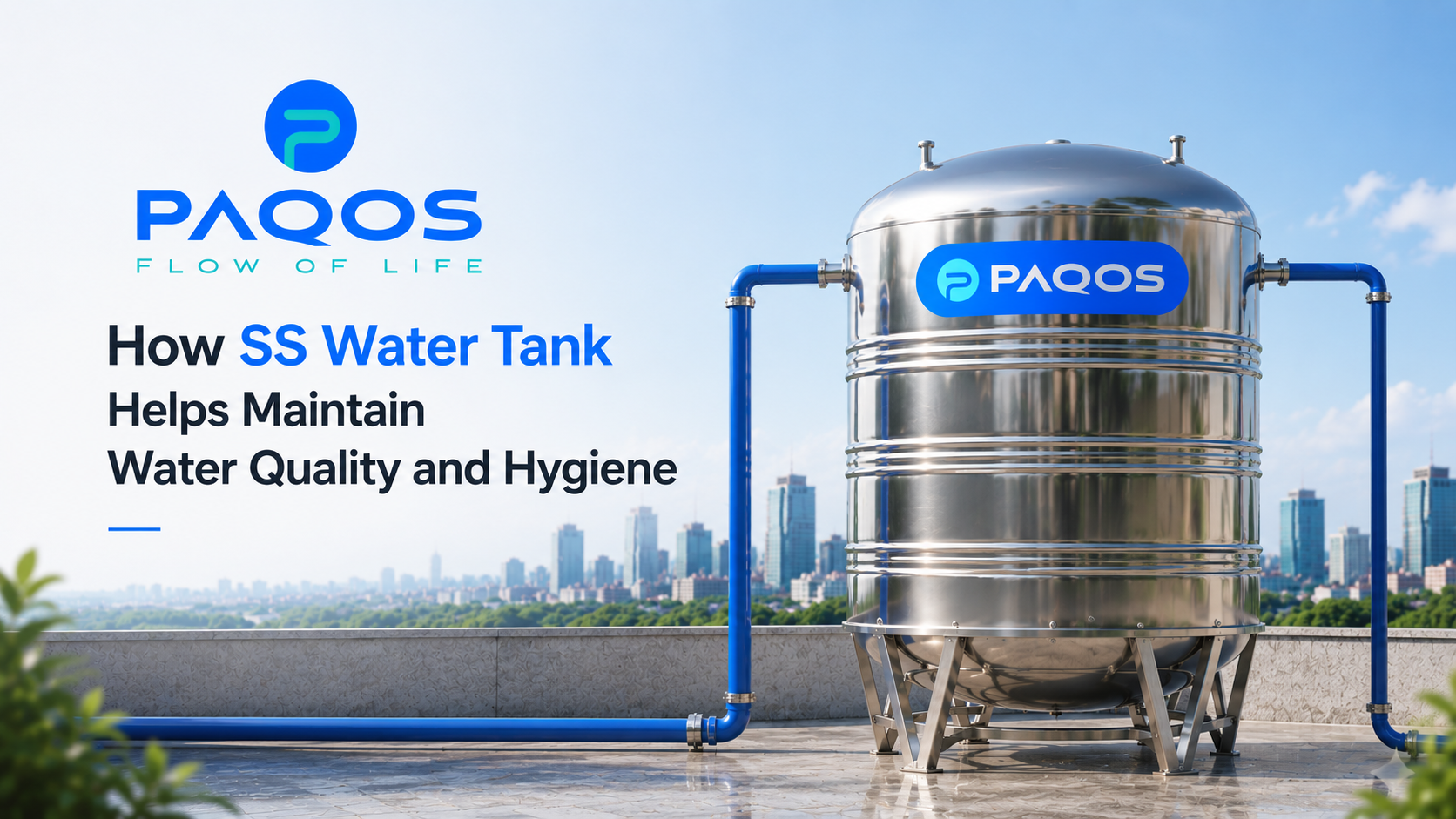
An SS Water Tank (stainless steel water tank) prevents bacterial growth, rust, and chemical leaching—making it one of the most hygienic water storage solutions available. Compared to plastic tanks, stainless steel tanks last 25+ years, require minimal maintenance, and keep stored water safe for drinking at home, in commercial spaces, and across industrial settings.
Clean water is not a luxury—it is a health necessity. Yet millions of households unknowingly compromise the quality of their water through poor storage choices. The tank holding your water matters just as much as the source it comes from.
According to the World Health Organization, unsafe water storage is one of the leading contributors to waterborne disease worldwide. Contamination does not always happen at the source. It can occur inside your own storage tank—through rust, bacterial growth, chemical leaching, or cracks that let in external pollutants.
This is exactly why the demand for SS Water Tanks is rising steadily across India. Homeowners, businesses, and facility managers are recognizing that stainless steel is not just a premium option—it is the smarter, safer, and more cost-effective choice in the long run.
This blog will walk you through everything you need to know about SS Water Tanks: what they are, how they protect water quality, how they compare to plastic tanks, and what to look for when choosing one for your home or commercial space.
What Is an SS Water Tank?
An SS Water Tank is a water storage container manufactured from stainless steel—an alloy of iron, chromium, and often nickel—designed specifically to store water safely without degrading its quality over time.
What grades of stainless steel are used in water tanks?
Two grades dominate the market:
- SS 304: The most commonly used grade for residential and commercial water tanks. It contains approximately 18% chromium and 8% nickel, offering strong corrosion resistance and suitability for potable water storage.
- SS 316: A premium grade with added molybdenum, making it more resistant to chlorides and harsh chemicals. Preferred for industrial applications and coastal environments where salt exposure is a concern.
Both grades meet food-grade safety standards and are approved for direct contact with drinking water under Bureau of Indian Standards (BIS) guidelines.
Where are SS Water Tanks used?
Stainless steel water storage tanks serve a wide range of applications:
- Residential: Overhead tanks, underground sump tanks, and apartment water storage
- Commercial: Hotels, hospitals, restaurants, office complexes
- Industrial: Manufacturing plants, food processing units, pharmaceutical facilities
Why Water Quality Depends on the Right Storage Tank
Most people focus on water purification—filters, RO systems, UV treatment—but overlook the container where treated water is stored for hours or days before use.
What contamination risks come with conventional water tanks?
Plastic and concrete tanks, especially older ones, carry real contamination risks:
- Plastic degradation: UV exposure causes plastic tanks to degrade over time, releasing microplastics and chemical compounds like BPA into stored water.
- Algae and fungal growth: Plastic surfaces are porous at a microscopic level, giving bacteria, algae, and fungi a surface to colonize.
- Rust and sediment: Metal tanks without proper coating develop rust, which discolors water and introduces harmful heavy metals.
- Odor and taste changes: Degraded tanks alter the taste and smell of water, even when the source water is clean.
According to the Ministry of Jal Shakti, ensuring safe water storage at the household level is a critical component of India’s drinking water safety strategy. The quality of stored water can deteriorate significantly within 24–48 hours if the storage vessel is compromised.
The right storage tank does not just hold water—it actively protects it.
How an SS Water Tank Maintains Water Quality
Does stainless steel prevent bacterial growth in water tanks?
Yes. The non-porous surface of stainless steel leaves no microscopic crevices for bacteria, algae, or fungi to anchor and multiply. Unlike plastic, which becomes increasingly rough and porous as it ages, stainless steel maintains a smooth, inert surface that resists microbial colonization.
This makes SS Water Tanks significantly safer for long-term water storage, particularly in warm climates where bacterial activity accelerates.
How does stainless steel protect water from chemical contamination?
Stainless steel is chemically inert—it does not react with water or release compounds into it under normal storage conditions. Plastic tanks, by contrast, can leach plasticizers, BPA, and other synthetic compounds—especially when exposed to heat or UV radiation.
This means water stored in a stainless steel tank retains its purity from the moment it enters until the moment it is used. No chemical interference. No invisible additives.
Why does water stored in stainless steel tanks stay fresh longer?
Two reasons: temperature stability and surface inertness.
Stainless steel tanks reflect heat rather than absorbing it, which helps maintain cooler internal temperatures. Cooler water inhibits bacterial multiplication and slows the degradation of dissolved oxygen—both of which affect freshness. The inert surface means there is no off-gassing or material breakdown contributing to taste or odor changes.
How do SS Water Tanks resist cracks and physical damage?
Plastic tanks become brittle over time, especially under prolonged UV exposure or in regions with significant temperature variation. Cracks—even hairline fractures—allow external contaminants to enter the tank.
Stainless steel, by contrast, is structurally robust and resistant to both thermal stress and mechanical impact. A well-manufactured SS Water Tank for home or commercial use can withstand decades of use without structural compromise.
Hygiene Benefits of an SS Water Tank
Easy to clean and maintain
The smooth internal surface of a stainless steel water tank makes cleaning straightforward. There are no textured surfaces or porous areas for scale, sediment, or biofilm to accumulate. Periodic cleaning with water and a mild disinfectant is sufficient to maintain hygiene standards.
No rust formation
Grade SS 304 and SS 316 tanks form a passive chromium oxide layer that protects the steel from oxidation. This self-regenerating layer means rust does not form under normal conditions—unlike galvanized or uncoated steel tanks, which are highly vulnerable to corrosion.
Safe for drinking water storage
Stainless steel has been classified as food-grade material and is widely used in food and beverage manufacturing globally. It does not alter the pH, taste, or chemical composition of stored water. For households with children, elderly members, or anyone with health sensitivities, this is a significant advantage.
SS Water Tank vs Plastic Water Tank
| Feature | SS Water Tank | Plastic Tank |
|---|---|---|
| Hygiene | Excellent | Moderate |
| Durability | Very High | Medium |
| Bacterial Growth Risk | Minimal | Higher |
| Chemical Leaching | None | Possible |
| Lifespan | 25+ Years | 5–10 Years |
| UV Resistance | High | Low–Moderate |
| Maintenance | Low | Medium |
| Eco-Friendliness | Recyclable | Limited recyclability |
| Weather Resistance | All conditions | Moderate |
The data is clear: on almost every metric that matters for health and longevity, SS Water Tanks outperform plastic alternatives.
Key Benefits of Installing an SS Water Tank
Here is a summary of why stainless steel water storage is a long-term investment worth making:
- Superior hygiene: Non-porous, non-reactive surface prevents contamination at the storage level
- Long lifespan: Properly maintained SS tanks last 25 years or more, far outlasting plastic alternatives
- Corrosion resistance: The passive chromium oxide layer prevents rust formation even in humid environments
- No chemical leaching: Water remains free from plastic-derived compounds and heavy metals
- Eco-friendly and recyclable: Stainless steel is 100% recyclable at end of life, reducing environmental impact
- Better return on investment: Higher upfront cost is offset by reduced replacement frequency and lower maintenance
- All-weather suitability: Performs reliably in extreme heat, cold, and humidity
How to Choose the Right SS Water Tank
Not all stainless steel tanks are equal. Here is what to evaluate before purchasing:
What capacity SS Water Tank do you need?
Calculate daily water usage per person (approximately 135 liters per day per person, per Central Public Health and Environmental Engineering Organisation guidelines) and multiply by household size. Add a buffer of 20–30% for peak demand days.
Which stainless steel grade is right for your application?
- Choose SS 304 for standard residential and commercial use in most Indian cities
- Choose SS 316 for coastal areas, industrial use, or locations with high chloride content in water
What else should you check before buying?
- Installation location: Overhead tanks require structural support assessment; underground tanks need proper sealing
- Manufacturer reputation: Look for BIS certification and food-grade compliance
- Warranty: A quality SS Water Tank should carry a warranty of at least 10 years
- After-sales support: Ensure the manufacturer or dealer offers installation guidance and service support
For households exploring comprehensive water management, pairing an SS Water Tank with a water pressure booster ensures consistent water pressure across all outlets—particularly important in multi-story buildings.
Why Homeowners Are Switching to SS Water Tanks
The shift toward stainless steel water storage in India reflects broader changes in how people think about health, sustainability, and long-term value.
Rising health awareness is the primary driver. As awareness of waterborne diseases and contamination risks grows, more households are willing to invest in safer storage infrastructure. UNICEF’s water safety guidelines emphasize that point-of-use storage is the final—and often overlooked—barrier before consumption.
Long-term cost savings are equally compelling. A plastic tank replaced every 7–10 years costs more over a 25-year period than a single SS Water Tank that performs reliably throughout.
Environmental consciousness also plays a role. Plastic tank disposal contributes to solid waste and micro plastic pollution. Stainless steel is fully recyclable and has a significantly lower environmental footprint over its lifetime.
Finally, stricter building and housing standards in urban India increasingly specify stainless steel for institutional and commercial water storage, signaling a wider industry shift.
Why Paqos SS Water Tanks Are a Reliable Choice
Paqos designs and manufactures SS Water Tanks built for the demands of Indian households and businesses. Key differentiators include:
- Premium stainless steel construction using food-grade SS 304 and SS 316 materials
- Focus on water purity and hygiene, with smooth internal surfaces and precision-welded joints that minimize contamination risk
- Durable, low-maintenance design suited to India’s diverse climate conditions
- Suitability for residential and commercial applications, from individual homes to large commercial complexes
Beyond water storage, Paqos offers a full suite of water management solutions—including water softener solutions, water filtration systems, and residential water solutions—making it possible to manage every stage of your water supply under one trusted brand.
For businesses and large facilities, Paqos also provides tailored commercial water solutions designed to meet higher capacity and compliance requirements.
The Smartest Investment Starts With What You Store Water In
A high-quality water purifier means little if the water sits in a contaminated tank before reaching your tap. Safe water storage is the final—and often neglected—link in the chain between clean water and good health.
An SS Water Tank solves this problem with a straightforward, durable, and hygienic solution. It protects water from bacterial growth, chemical contamination, rust, and physical degradation. It outlasts plastic tanks by decades. And it delivers better health outcomes and lower long-term costs for any household or business willing to make the switch.
If you are evaluating water storage options for your home or facility, the decision comes down to one question: do you want a short-term solution, or a long-term investment in water quality and health?
Ready to upgrade your water storage? Connect with the Paqos water experts to find the right SS Water Tank for your home or business. Get expert guidance on capacity, grade selection, and installation—tailored to your specific needs.
Frequently Asked Questions
What are the main benefits of an SS Water Tank?
SS Water Tanks prevent bacterial growth, resist rust and corrosion, and do not leach chemicals into stored water. They are durable (lasting 25+ years), easy to clean, safe for drinking water storage, and perform reliably across all weather conditions—making them a superior long-term investment compared to plastic tanks.
Is an SS Water Tank better than a plastic water tank?
Yes, for most applications. Stainless steel tanks offer better hygiene, longer lifespan, no chemical leaching, and greater structural durability. Plastic tanks cost less upfront but degrade over time, carry higher bacterial growth risk, and require more frequent replacement—making stainless steel the more cost-effective choice over 10–25 years.
How long does an SS Water Tank last?
A well-manufactured SS Water Tank using food-grade SS 304 or SS 316 can last 25 years or more with basic maintenance. This is significantly longer than plastic tanks, which typically need replacement every 5–10 years.
Is stainless steel safe for drinking water storage?
Yes. Stainless steel is classified as a food-grade material and is globally used in food processing, beverage manufacturing, and drinking water infrastructure. It does not alter water’s pH, taste, or chemical composition under normal storage conditions. Both SS 304 and SS 316 grades are approved for potable water storage.
How often should an SS Water Tank be cleaned?
Most manufacturers recommend cleaning an SS Water Tank every 6–12 months under normal usage conditions. The smooth, non-porous surface makes cleaning straightforward—requiring only water, a soft brush, and a mild disinfectant. More frequent cleaning may be necessary in areas with high sediment or turbidity in the water supply.
What is the best grade of stainless steel for a water tank?
SS 304 is the recommended grade for most residential and commercial applications, offering strong corrosion resistance and food-grade safety at a reasonable price. SS 316 is preferable for coastal regions, industrial environments, or locations where water has elevated chloride or mineral content, due to its enhanced resistance to corrosive agents.